

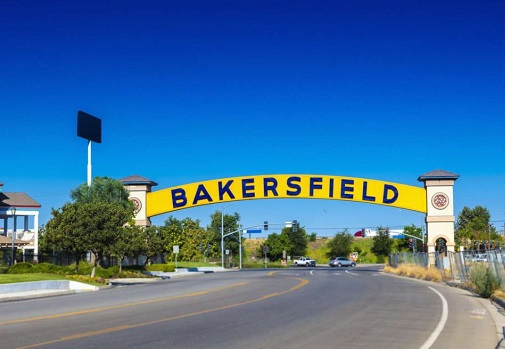
Medical Marijuana Card in Bakersfield, CA: How to Get One
Yes. Bakersfield and the rest of Kern County use California’s statewide medical program, so what you need is a written recommendation from a physician licensed in California. The appointment happens online, so you do not have to drive anywhere. The city bans cannabis businesses, but that ban does not stop you from being a patient.
In short
-
The state runs it, not the city
California has one medical cannabis program, overseen by the Department of Public Health (CDPH). A patient in Bakersfield follows the same rules as a patient in San Diego.
-
Open to residents 18 and up
Any California resident aged 18 or older can be evaluated. For a younger patient, state law brings a parent or legal guardian into the process.
-
A physician makes the call
Only an MD or DO with a California license can recommend cannabis, and only after examining you. Some people are told it is not the right option.
-
A ban on businesses, not on patients
Bakersfield and unincorporated Kern County prohibit commercial cannabis. Holding a recommendation stays legal for everyone who lives there.
What does California’s medical program give a Bakersfield patient?
Maybe it is a lower back that hurts more after every long shift, migraines that take whole days away, or nights when sleep simply does not come. Months of that wear a person down. Asking about cannabis can then feel like asking to be judged, and in California it should not: the medical route is an ordinary part of health care, worked out between you and a physician.
What makes it harder is the noise around the subject. Two different documents both get called a “card”, and plenty of shops in Kern sell hemp and delta-8 products that sit outside the state’s licensed medical cannabis system. The program itself is simpler than the noise: one set of rules for the whole state, a physician with a California license, and no reason to drive to another city.
It rests on a handful of laws rather than one. Proposition 215, passed in 1996, lets a seriously ill Californian use cannabis on a physician’s recommendation [1]. SB 420 later added the voluntary county ID card program [2]. State law also recognizes a primary caregiver: someone the patient designates who has consistently looked after the patient’s housing, health or safety [3]. Licensed businesses answer to the Medicinal and Adult-Use Cannabis Regulation and Safety Act (MAUCRSA) and to the Department of Cannabis Control (DCC) [4]. Recreational use is legal in California for adults 21 and older [5]. A medical card from another state is not valid here.
How old are you?
Pick one, and the row that applies to you is marked in each card.
-
Age
-
Possession
-
Home cultivation
-
Sales tax
Sales tax at a licensed retailer in Bakersfield With a physician’s recommendation You Not charged with a county ID card [8] excise tax is still charged; estimate the saving Adult use, 21+ You 8.25% in Bakersfield [9] on top of the cannabis excise tax
Which of these rows matters most depends on your age. Between 18 and 20, a recommendation is the only legal way to buy cannabis in California [6]. At 21 or older, someone who buys now and then and has no plans to grow may find a card changes little for them, and that is a fair conclusion. The real differences for that reader are the larger possession and plant limits and, with the county ID card, the sales tax. Local governments can add reasonable rules on growing at home, so check with your city or the county before you plant anything.
A few things changed recently. The 8.25% Bakersfield rate is the one the California Department of Tax and Fee Administration (CDTFA) lists as operative from October 1, 2026 [9]. The DCC reissued its registry of local cannabis rules on March 18, 2026 [10]. And in April 2026 the federal government placed marijuana used under state medical programs in Schedule III [11], which is why some federal forms are being revised.
How a patient moves through the program, from the first appointment to renewal, is laid out on our California medical card page.
Bakersfield bans cannabis businesses. What does that mean for patients?
Bakersfield sits inside Kern County, and both governments have used their right to keep commercial cannabis out. The state keeps a public record of those local decisions: the DCC tool Where cannabis businesses are allowed shows, city by city, which licensed activities are permitted [10]. For Bakersfield every activity is listed as prohibited, from storefront sales to testing labs. None of that touches your right to see a physician, hold a recommendation and use medical cannabis within state law.
Where do you live in Kern County?
If you are not sure your address is inside Bakersfield city limits, the answer below is the same for the city and for unincorporated Kern County.
City of Bakersfield
- Storefront retailProhibited
- Delivery businessesProhibited
- CultivationProhibited
- Manufacturing, testing, distributionProhibited
DCC local ordinance registry, record updated January 22, 2022; registry edition March 18, 2026 [10]
Unincorporated Kern County
Areas of the county that belong to no city, such as many outlying communities around Bakersfield.
- Storefront retailProhibited
- Delivery businessesProhibited
- CultivationProhibited
- Manufacturing, testing, distributionProhibited
DCC local ordinance registry, Kern County record updated January 22, 2022; registry edition March 18, 2026 [10]
City of Arvin
- Storefront retailProhibited
- Delivery businessesAllowed
- CultivationNot listed in this summary
- Manufacturing, testing, distributionNot listed in this summary
DCC local ordinance registry, edition March 18, 2026 [10]
California City
- Storefront retailAllowed
- Delivery businessesNot listed in this summary
- CultivationNot listed in this summary
- Manufacturing, testing, distributionNot listed in this summary
DCC local ordinance registry, record updated January 22, 2022; registry edition March 18, 2026 [10]
City of McFarland
- Storefront retailAllowed
- Delivery businessesNot listed in this summary
- CultivationNot listed in this summary
- Manufacturing, testing, distributionNot listed in this summary
DCC local ordinance registry, record updated February 24, 2026; registry edition March 18, 2026 [10]
Other Kern cities
Delano, Maricopa, Ridgecrest, Shafter, Taft, Tehachapi and Wasco
- Storefront retailProhibited
- Delivery businessesProhibited
- CultivationProhibited
- Manufacturing, testing, distributionProhibited
DCC local ordinance registry, edition March 18, 2026 [10]
What stays the same everywhere in Kern
Wherever your address falls, your recommendation is valid, and the state rules on how much you may keep and where you may use cannabis are the same as anywhere else in California. State regulations also let the delivery employee of a licensed retailer deliver to any jurisdiction in California, provided every delivery rule is followed [12]. The same regulation bars deliveries to publicly owned land, to buildings leased by a public agency, and to K-12 schools, day care centers and youth centers [12].
Not a licensed seller
A shop selling hemp or delta-8 products is not a licensed medical cannabis retailer, whatever its sign says. A 2026 review of retail hemp products found that such stores often lack age checks, clear safety labeling and regulatory oversight [13]; it describes gaps in regulation nationwide rather than in any one city. Before you buy, look the business up in the DCC license search [14].
Possession, cultivation and business licensing across the whole state are covered in our guide to California cannabis law.
Recommendation or Kern County ID card: which one do you actually need?
What’s a med card in California? The phrase covers two separate documents. The first is the written recommendation that a physician with a California license signs after examining you [15], and for most patients that page is the whole “card”. The second is the Medical Marijuana Identification Card (MMIC), a voluntary photo ID from the CDPH Medical Marijuana Identification Card Program [16], issued through county health departments. Neither is the “DOT medical card” that commercial drivers carry: that one is a federal fitness certificate and has nothing to do with cannabis [17].
For a Bakersfield resident, the MMIC comes from Kern County Public Health under the state program. How each county takes applications, and how to reach it, is listed in the CDPH county program directory [18]. You apply in the county where you live, with a current recommendation, a government photo ID and proof that your home is in Kern. After the application is complete, the county has up to 30 days to verify it and 5 more days to issue the card [19].
Looking up Medi-Cal in Bakersfield? It matters here in exactly one place: state law cuts the county’s MMIC fee by 50% for Medi-Cal beneficiaries [20], so bring proof of coverage when you apply. That fee is paid to the county, separately from anything you pay a physician. If you want the two documents compared in more depth, read our page on the doctor’s recommendation vs. MMIC.
-
Who issues it
-
What a licensed seller asks for
-
Sales and use tax
-
Excise tax
Recommendation
Charged on every purchase
County ID card (MMIC)
Still charged; the card does not lift it [8]
Is the county ID card worth it for you?
The card saves the sales tax, which in Bakersfield is 8.25% of what you spend at licensed retailers. Spending $100 a month, for example, means $8.25 a month, or $99 a year, stays with you. The excise tax is paid either way.
Use your own figure: the total on your receipts. Nothing you set here leaves the page.
Buying outside Bakersfield city limits? Look up the rate for that address with the CDTFA tax rate lookup.
Move the slider to see your estimate.
a year
stays with you because the county ID card removes the 8.25% sales tax
a month
The excise tax is paid with or without the card. Set the result against the Kern County MMIC fee: the county sets it, and Medi-Cal beneficiaries pay half [20]. Bakersfield sales tax rate: 8.25% [9].
If the numbers favor the card, here is how to apply for the county ID card.
Which conditions qualify in California?
California does not keep a long list. State law names a set of serious medical conditions and then leaves the rest to the physician’s judgment [3]. Rules like this vary widely from state to state, as a 2025 review of state programs points out [21], so a list written for another state tells you nothing about California. Each chip below opens our page on that condition.
Named in H&S Code §11362.711 conditions
Some entries reach further than they look. The statute covers persistent muscle spasms “including, but not limited to” those of multiple sclerosis, and seizures including those of epilepsy [3]. Cachexia is the serious loss of weight and muscle that can come with a long illness such as cancer. Being on the list does not mean cannabis treats the disease; the physician weighs whether it may ease your symptoms.
The list closes with “any other chronic or persistent medical symptom” that substantially limits a major life activity under the Americans with Disabilities Act, or that could cause serious harm if left unrelieved [3]. This is where PTSD, anxiety and insomnia are usually considered, and the physician decides at the appointment whether your situation fits.
Every diagnosis has its own page in our conditions library, with symptoms, treatment options and the research so far.
How does medical marijuana work, and what effects should you expect?
How does marijuana help medically, if it helps at all? It acts on a signaling system the body already has, and that same action explains both the relief some patients describe and the side effects worth planning around. Read this section as preparation for the appointment, not as a treatment plan.
How it works in the body
The endocannabinoid system is a network of receptors and natural messenger molecules involved in pain signaling, appetite, mood, sleep and inflammation. THC and CBD, the two best-studied compounds in cannabis, act on it in different ways [22]. THC binds to those receptors and produces the intoxicating effect. CBD works through other routes and does not. So a CBD-only product and a THC product are different medicines, and what is true of one does not automatically apply to the other.
What research supports, and where it stops
The most developed evidence concerns chronic pain, nausea and vomiting from chemotherapy, and muscle spasticity in multiple sclerosis [22]. Even there, cannabis may ease symptoms rather than treat the illness behind them, and results differ between people. For anxiety, PTSD and sleep problems the research is thinner [22], which is one reason physicians look at those cases individually.
Side effects and interactions
THC commonly causes drowsiness, dizziness, dry mouth and slower reactions; larger amounts can bring anxiety or a racing heart [23]. Sedation adds up with other sedating medicines. Taken with benzodiazepines, sleep aids or opioids, cannabis can make you sleepier than either one alone, as our article on mixing cannabis and Xanax explains. It also slows the reactions you need for driving, so plan the day around it.
Forms, and what each one avoids
Cannabis is not only something people smoke. Under a medical card the useful question is how a form enters the body, because each route sidesteps some risks and keeps others [23].
Show forms
-
Inhaled smoking dried flower; vaporizing dry flower; oil cartridges and pens; dabbing concentrates
- What it avoids
- The first pass through the liver; the effect arrives within minutes
- What still applies
- Smoke or hot aerosol travels through the throat and lungs; reduced alertness and its effect on driving; interactions with other medicines
-
Swallowed capsules, edibles, drinks, oils taken by mouth
- What it avoids
- Anything reaching the airways
- What still applies
- A slow start and a long effect, so a second dose taken because “nothing is happening” can add up to too much; a pass through the liver; drowsiness and interactions
-
Under the tongue or in the cheek tinctures, oils, oromucosal sprays
- What it avoids
- Smoke and vapor in the airways
- What still applies
- THC still acts on the whole body; the share that gets swallowed passes through the liver; drowsiness and interactions
-
On the skin creams and balms; transdermal patches
- What it avoids
- The airways altogether; a cream or balm works mostly at the spot where it is rubbed in
- What still applies
- A patch is designed to carry THC into the bloodstream, so it brings whole-body effects and interactions much like a swallowed form
-
FDA-approved prescription drugs cannabidiol (Epidiolex), dronabinol (Marinol, Syndros), nabilone (Cesamet)
- How you get it
- A prescription filled at a pharmacy; these drugs are not sold under a medical card [24]
- What still applies
- The side effects and interactions on the label, reviewed with the prescriber
Across every form, the second question is what the product contains. THC and CBD are separate compounds, and the ratio on the label matters as much as the route. A “CBD” product from a hemp shop is not the same thing as a tested medicinal product from a state-licensed retailer.
Choose the form with a physician
Picking products and amounts on your own carries real risk, especially with swallowed forms, other medicines, pregnancy, or heart and mental health conditions [23]. The physician who reviews your history is the person to talk it through with, and that conversation is part of the appointment.
Before the appointment, write down every medicine and supplement you take; how the appointment itself runs is described on our California medical card page.
Who qualifies for a medical marijuana card in Bakersfield?
Can you get a med card at 18? Yes, and from 18 you are evaluated on your own. Younger patients can qualify as well, but state law involves a parent or legal guardian. For anyone aged 18 to 20, a physician’s recommendation is the only legal way to buy cannabis in California, because adult-use sales start at 21 [6].
Just moved to Bakersfield? What counts is that you live in California now, not how long you have been here. A California driver’s license or a DMV identification card [25] proves it most simply. Until yours arrives, a recent lease or utility bill showing your Bakersfield address usually serves for the appointment. For the county ID card, Kern County asks for its own proof of residence [18].
Are you a veteran? VA physicians do not fill out forms for state cannabis programs [26], so the evaluation happens outside the VA, with a California-licensed physician. Our page for veterans explains how that sits alongside VA care.
Who can give a medical marijuana card, and who prescribes it? Only a physician with an active California license, either an MD or a DO, can sign a recommendation that California recognizes [15]. Strictly speaking it is a recommendation rather than a prescription, since cannabis is not filled at a pharmacy like other drugs. A diagnosis from another doctor helps, but it is not required, and the physician may decide cannabis is not right for you.
Where are you starting from?
New to all of this? Work through the checklist below, then the steps to a card. Already hold a California recommendation? Go straight to renewal. Arrived with a card from another state? It does not carry over, so you start here as a new patient. Helping a relative? State law recognizes a designated primary caregiver [3], but every patient still needs a recommendation of their own. If your job involves commercial driving or federal rules, read the legal limits first.
Ready for your appointment?
Tap one answer on each line. Your answers stay on this page.
Before the appointment, have
- Your age confirmed, or a parent or guardian if you are under 18
- A California ID, or a recent bill or lease with your address
- A current government photo ID
- Notes on your diagnosis, medicines and past treatments
- A phone or computer in a private room
Your summary fills in as you answer.
of 5 ready
You have everything the physician will ask about.
Still needed
Not answered yet
When you’re ready: Get your California medical card
How to get a medical marijuana card in Bakersfield, step by step
Searching how to get a med card online, or how to apply for one? Five steps cover it, from a Bakersfield address to a signed California recommendation. Three of them happen at home. The fourth is optional and goes through Kern County, and the fifth fits on one line.
-
Check that your condition fits
Look for it among the qualifying conditions. Not named there? The clause on other chronic or persistent symptoms may still cover it, and that judgment belongs to the physician.
- Bring
- Your diagnosis, or a plain description of your symptoms
- Leave with
- A clear idea of whether to book
-
Get your documents together
Answer the five lines of the readiness checklist. Short notes on earlier treatment save time once the appointment starts.
- Bring
- Photo ID and proof that you live in California
- Leave with
- Nothing missing when the physician asks
-
See a California-licensed physician online
Expect about five minutes for the application and about fifteen for the appointment. The start time is something you settle with the physician, so block out an hour instead of a quarter of one: an earlier patient can take longer than planned. You stay where you are; nothing requires a trip.
- Bring
- A phone or computer and your notes
- Leave with
- The physician’s decision and, if approved, a signed recommendation
-
Apply for the county ID card, if you want one
Reach Kern County Public Health through the CDPH county program directory [18]. Once your application is complete, the county has up to 30 days to verify it and 5 more to issue the card [19].
- Bring
- Your recommendation, photo ID, proof of Kern residence and the county fee
- Leave with
- An MMIC, valid for up to one year [27]
-
Buy only from a state-licensed retailer you have checked in the DCC license search [14]
Steps 1 to 3 come down to one online appointment with a physician licensed in California.
See how the California appointment worksWhat is a 420 evaluation, and can you get one online in Bakersfield?
People type “420 evaluation”, “420 doctor” or “medical marijuana evaluation near me” because those are the words they have heard. Behind them is an ordinary medical appointment: a physician reviews your health and decides, on medical grounds, whether cannabis is a reasonable option for you. Nothing about it is casual. A practice offering these appointments answers to the same professional rules as any other.
Is it legal online? Yes. California lets licensed physicians care for patients through telehealth, meaning care given by phone or online while patient and physician are in different places [28]. The law also requires an appropriate prior examination before a physician recommends cannabis [15], and an online appointment with a California-licensed MD or DO is that examination. So when you search “med card near me” or “clinics in Bakersfield, CA”, the nearest option is the room you are sitting in, anywhere from downtown Bakersfield to Tehachapi.
What does it cost? Plans start at $39 a year, and the current options are on our California medical card page. You pay for a physician’s assessment, and approval is not guaranteed. If you decide on the county ID card, its fee is separate and goes to Kern County.
During the appointment the physician asks about your diagnosis, your symptoms, the medicines you take and what you have already tried. If cannabis is not a good fit for you, you hear that as well, along with the reason.
-
Online appointment
- Who decides
- A physician with an active California license
- Where you sit
- Wherever you are in California, usually at home
- Who sees you waiting
- No one
- What you receive
- If approved, a signed recommendation by email, also kept in your account
-
Office visit
- Who decides
- A physician with an active California license
- Where you sit
- An exam room, after the drive there and back
- Who sees you waiting
- Other patients in the waiting room
- What you receive
- The same recommendation, often on paper
The document is identical whichever way you go, and so is the standard behind it: a physician licensed in California, examining you one to one.
Across 250 reviews from patients in the states where we are licensed. We do not sort them by score and do not hide the low ones.
- 150,000+patients evaluated – everyone who has been through an appointment with us, in every state where we are licensed
- Since 2017doing only this: online evaluations for medical cannabis programs, and nothing else on the side
Questions about the appointment itself are answered in our California medical card FAQ.
How do you choose a physician and verify a California license?
A state lookup tells you more than any advertisement: whether a license is active, which board issued it and whether discipline is on record. Do it before you book with anyone, and do it for us too. A valid recommendation names the physician, shows their license number, carries a date and is signed. Because it is a recommendation and not a prescription, you will never take it to a pharmacy.
-
The Department of Consumer Affairs lookup for MDs licensed by the Medical Board of California, with license status and any discipline [29].
-
Osteopathic Medical Board of California
Issues licenses to DOs practicing in California and lets you confirm one on its site [30].
-
The federal list of National Provider Identifiers, which shows that a clinician is a registered provider [31].
-
The current team that evaluates patients here, listed with the details you need to run the checks above yourself.
Red flags
Walk away if a service promises approval before anyone has examined you, or cannot tell you which physician will see you and in which state that physician holds a license.
What happens after your appointment?
When the appointment ends, the questions are nearly always the same: where the documents are, whether you can use them straight away, and what a seller will check. Searches like “medical marijuana card log in”, “status of medical card” and “med card download” are all versions of those. Pick the situation closest to yours.
Where are you right now?
Choose one, and the steps for that situation appear below.
Just had my appointment
Watch your inbox
If the physician approves, the signed recommendation arrives as a PDF at the email address on your application.
Save a copy
Keep it on your phone or print it. The same documents, with their expiration date, stay in your account, and you can download them again whenever you need to.
Sign in to your account to view and download your documents.
No email yet
Check spam and the address
Look in spam and any other inbox tabs, and check the email address in your application for a typo. Your account shows the current status too.
Still nothing, or need a new time?
Get in touch, and we will check the status or move the appointment.
Call us at (888) 409-2951, or sign in to your account to see the status.
Going to a licensed seller
Bring two things
Your recommendation, printed or on your phone, and a government photo ID. The MMIC is optional for buying [6].
The seller checks it
A licensed retailer confirms that your recommendation is valid before the first sale, and an MMIC is checked against the state registry [19]. Hemp and delta-8 shops are not part of this system; the DCC license search [14] shows which businesses are.
Have cash or a debit card
Cannabis is still controlled under federal law, so banks approach these businesses carefully [32], and many licensed retailers, the places most people call a dispensary, do not take credit cards. Ask before you go.
Paying sales tax at the counter? See when the county ID card pays off.
What does a medical card protect in Bakersfield, and what doesn’t it?
A recommendation gives you legal access under California law. It does not reach every place or situation, and it does not override federal law. Six topics come up again and again with Bakersfield patients, and each tab below covers one of them, with its source.
Pick a topic.
Where you may and may not use it
A recommendation is not permission to medicate in public. State law bans using cannabis in any public place, and smoking or vaping it anywhere tobacco smoking is banned, within 1,000 feet of a school, day care center or youth center while children are present, and while driving or riding in a vehicle [33]. Sidewalks, parks and public buildings in Bakersfield fall under those rules, and federal land is closed to cannabis under federal law. In practice, use belongs in a private home, with the owner’s permission if the home is not yours.
Your lease still applies at home. A landlord may ban smoking on the property; if yours does, ask the physician about forms that produce no smoke.
Driving
Driving under the influence of any drug is illegal in California, and a recommendation is no defense [34]. Using cannabis while driving or riding in a vehicle is banned too [33], so carry products sealed and out of reach. Wait until the effects have fully worn off, and allow longer after a swallowed form.
Commercial drivers face a separate rule. The DOT medical certificate that truck drivers carry is federal, and federal rules disqualify a driver who uses a controlled substance not prescribed under federal rules. A California recommendation does not change that [17].
Work
Medical marijuana and working: since January 1, 2024, AB 2188 bars most California employers from penalizing you for cannabis use off duty and away from work, or for a drug test that finds only non-psychoactive metabolites. SB 700 adds that they may not ask about past use [35]. Being impaired on the job is not protected, and an employer can still keep a drug-free workplace.
The protection does not cover the building and construction trades, jobs that need a federal background check or security clearance, or roles where federal law or a federal contract requires testing, DOT-regulated jobs among them [35]. In Kern County that describes a lot of work in the oil fields, in trucking and at federal sites, so read your employer’s policy before relying on the state rule.
Firearms
Federal law, not California, decides who may own a gun. 18 U.S.C. §922(g)(3) bars an unlawful user of a controlled substance from possessing firearms [36], and anyone buying from a licensed dealer fills in ATF Form 4473, which asks about it [37]. Since the April 2026 move of state-program medical marijuana to Schedule III [11], the rules for patients have been under revision.
Federal law
A false answer on Form 4473 is a federal crime. Until final guidance takes effect, read the current form closely and speak with a lawyer if you are unsure how it applies to you.
Travel
Your recommendation works in California only. Other states decide for themselves whether to accept a patient from elsewhere, and many do not; see which states accept out-of-state medical cards. At airports, TSA officers who find cannabis refer the matter to law enforcement [38]. Our guide to traveling with cannabis covers the rest.
Federal law
Taking cannabis across state lines is a federal matter. Leave it in California, whether you drive or fly, even when the other state allows it.
Privacy
California keeps no public list of patients. A physician’s recommendation is a medical record between you and your physician, and it is not filed with the state. If you apply for an MMIC, the county and the state must keep the application confidential [39], and the online registry lets law enforcement and licensed sellers confirm only that a card is valid [19].
How do you renew a medical marijuana card in Bakersfield?
Renewal has the same two layers as the card. The physician sets how long your recommendation lasts, and the expiration date is printed on it and shown in your account. Renewing means a new appointment, not a fresh signature on old paper: the physician asks how you have been, whether cannabis is still helping and whether your health or medicines have changed.
The county ID card runs on its own clock. An MMIC is valid for up to one year [27] and is renewed with Kern County Public Health, which needs a current recommendation to do it. Once a recommendation lapses, no MMIC can be renewed on it and no seller can accept it, so begin a few weeks before whichever date comes first.
What are you renewing? Check the paper or card you hold.
Your recommendation
- Who renews
- A physician with a California license, at a new appointment
- When to start
- A few weeks before the expiration date the physician set
- How
- Online, the same way as the first appointment
Lost the PDF? Sign in to your account and download a fresh copy.
Your county ID card
- Who renews
- Kern County Public Health, with your current recommendation [18]
- When to start
- Before the card’s one-year term runs out [27]
- How
- Through the county, using the contacts in the CDPH county program directory
Both documents
- Who renews
- The physician renews the recommendation first, then Kern County renews the MMIC on it
- When to start
- A few weeks before the earlier of the two expiration dates
- How
- Book the physician first; the county step needs the new recommendation in hand
Each step of a renewal appointment is laid out on our page about renewing a California medical card online.
Medical marijuana card in Bakersfield: FAQ
How fast can I get a medical card in Bakersfield?
The application takes about five minutes and the appointment about fifteen; the start time is agreed with the physician. If you are approved, the signed recommendation is what you show a licensed seller. The optional county ID card takes longer: once the application is complete, Kern County has up to 30 days to verify it and 5 more to issue the card [19].
Can I get a medical card for PTSD or anxiety in California?
Possibly. Neither is named in the state list, but the law also covers any chronic or persistent symptom that substantially limits a major life activity [3], and that is where physicians consider PTSD and anxiety. Whether your case fits is decided at the appointment.
Is an online 420 evaluation legal in California?
Yes, as long as the physician holds a California license. State law allows physicians to care for patients at a distance [28], and the appointment counts as the examination the law requires before a recommendation [15]. The section on 420 evaluations explains how it works.
Can I get a med card at 18?
Yes. From 18 you are evaluated on your own, and with a recommendation you can buy medicinal products from a licensed retailer [6]. Between 18 and 20 it is the only legal way to buy in California. Under 18, a parent or legal guardian is involved.
Does the Bakersfield ban on cannabis businesses stop me from being a patient?
No. The city and unincorporated Kern County prohibit commercial cannabis activity [10], but neither rule touches your recommendation or your rights as a patient under state law. The Kern County rules section shows what applies where you live.
How do I log in and download my recommendation?
Sign in to your account with the email from your application. Your documents and their expiration date are listed there, and you can download a fresh PDF at any time.
More answers about the state program are in our California medical card FAQ.
Your next step if you live in Bakersfield
Skip City Hall: Bakersfield has no card of its own, and the state program already covers you.
Book an online appointment, where a California-licensed physician reviews your health and decides.
If approved, keep the signed recommendation on your phone; the county ID card stays optional.
One online appointment with a physician licensed in California. Plans start at $39 a year, and approval is not guaranteed.
Get your California medical cardNot sure you have everything? Go back to the appointment checklist. Want the bigger picture first? See how the service works.
- Medical card in Fresno
- Medical card in Modesto
- Medical card in Sacramento
- Medical card in Los Angeles
Educational material only. A physician decides at the appointment whether cannabis suits you, and the card programs are run by California and Kern County.
References
39 sources
- 1. California Legislative Information. Health and Safety Code §11362.5, Compassionate Use Act of 1996. 1996.
- 2. California Legislative Information. Health and Safety Code §11362.71, voluntary identification card program. 2003.
- 3. California Legislative Information. Health and Safety Code §11362.7, definitions. 2003.
- 4. California Legislative Information. Business and Professions Code §26000, Medicinal and Adult-Use Cannabis Regulation and Safety Act. 2017.
- 5. California Legislative Information. Health and Safety Code §11362.1, adult use (Proposition 64). 2016.
- 6. California Legislative Information. Business and Professions Code §26140, age requirements for sales. 2017.
- 7. California Legislative Information. Health and Safety Code §11362.77, patient possession and cultivation limits. 2003.
- 8. California Legislative Information. Revenue and Taxation Code §6363.7, medicinal cannabis sales tax exemption. 2016.
- 9. California Department of Tax and Fee Administration. California sales and use tax rates by county and city, operative October 1, 2026. 2026.
- 10. California Department of Cannabis Control. Cannabis local ordinances registry, edition of March 18, 2026 (Where cannabis businesses are allowed). 2026.
- 11. Federal Register. Schedules of controlled substances: placement of marijuana in state medical programs and FDA-approved products in Schedule III, 91 FR 22714. 2026.
- 12. Cornell Law School, Legal Information Institute. Cal. Code Regs. tit. 4, §15416, Delivery to a Physical Address. 2026.
- 13. Federal and State Gaps in Regulation of Hemp-Derived Delta-9-Tetrahydrocannabinol Beverages. DOI: 10.1016/j.amepre.2025.108181 PMID: 41197976
- 14. California Department of Cannabis Control. Cannabis license search. 2026.
- 15. California Legislative Information. Business and Professions Code §2525.3, examination before a cannabis recommendation. 2016.
- 16. California Department of Public Health. Medical Marijuana Identification Card Program. 2026.
- 17. Electronic Code of Federal Regulations. 49 CFR 391.41, physical qualifications for drivers. 2026.
- 18. California Department of Public Health. Medical Marijuana Identification Card Program: county program contacts and hours. 2026.
- 19. California Department of Public Health. Medical Marijuana Identification Card Program: frequently asked questions. 2026.
- 20. California Legislative Information. Health and Safety Code §11362.755, identification card fees. 2003.
- 21. Medical Marijuana in the Mid-Atlantic Region. DOI: 10.32481/djph.2025.09.10 PMID: 41035715
- 22. National Center for Complementary and Integrative Health. Cannabis (marijuana) and cannabinoids: what you need to know. 2026.
- 23. Centers for Disease Control and Prevention. Cannabis health effects. 2026.
- 24. U.S. Food and Drug Administration. FDA and cannabis: research and drug approval process. 2026.
- 25. California Department of Motor Vehicles. Identification (ID) cards. 2026.
- 26. U.S. Department of Veterans Affairs. VA and marijuana: what veterans need to know. 2026.
- 27. California Legislative Information. Health and Safety Code §11362.745, identification card validity. 2003.
- 28. California Legislative Information. Business and Professions Code §2290.5, telehealth. 2026.
- 29. California Department of Consumer Affairs. DCA License Search. 2026.
- 30. Osteopathic Medical Board of California. Osteopathic Medical Board of California. 2026.
- 31. Centers for Medicare & Medicaid Services. NPPES NPI Registry. 2026.
- 32. Financial Crimes Enforcement Network. BSA expectations regarding marijuana-related businesses. 2014.
- 33. California Legislative Information. Health and Safety Code §11362.3, where cannabis may not be used. 2016.
- 34. California Legislative Information. Vehicle Code §23152, driving under the influence. 2026.
- 35. California Legislative Information. Government Code §12954, off-duty cannabis use and employment (AB 2188, SB 700). 2024.
- 36. Office of the Law Revision Counsel, U.S. House of Representatives. 18 U.S.C. §922, unlawful acts. 2026.
- 37. Bureau of Alcohol, Tobacco, Firearms and Explosives. Firearms. 2026.
- 38. Transportation Security Administration. Medical marijuana. 2026.
- 39. California Legislative Information. Health and Safety Code §11362.713, confidentiality. 2003.