


Lost Your Medical Marijuana Card? What to Do Next


A lost card is replaceable, and nothing you already paid for disappears with it. Your record in the state program stays exactly where it was. What changes is where you go next, and that depends on which document actually went missing: the recommendation your physician signed, or the card your state issued.
The order is the same in every program. Work out which of the two documents is gone, ask for a replacement from whoever issued it, and treat yourself as unlicensed until the new document is in your hands. The rest of this article walks through each case, including the awkward parts — what you cannot buy in the meantime, and when a replacement is not what you need at all.
The short version
- The physician’s recommendation and the state’s card are two different documents, replaced in two different places.
- The old card stops working the moment a replacement is issued, so a stranger who finds it cannot buy anything with it.
- If the card was stolen, file a police report first, then apply for the replacement.
- A card that never showed up in the mail is a different case, with a different word on the form: never received, not lost.
- While the replacement is being processed, you have no document to show, and the law treats you accordingly.
Which of the two documents did you lose?
Most of the confusion around a lost card comes from one place: people go looking for help from whoever they remember paying. The two documents in a medical cannabis program are issued by two different parties, and each of them replaces only its own.
The recommendation your physician signs
Issued by the licensed physician who evaluated you, usually as a signed PDF and sometimes as a letter on paper. It states that you were examined and that cannabis is appropriate for your condition. Without it, nothing else in the program can start: the state has nothing to register.
It has its own expiration date, which is not the same date as the one printed on the card.
The card your state issues
Issued by the state program after it reviews your application and your recommendation. It is the plastic or paper card you show at a dispensary, with your patient number on it, and it is the only one of the two documents that a state office can reprint.
It also carries the record behind it — that record survives the card, which is why losing the card is an administrative problem and not the end of your status.
What exactly did you lose?
Pick the case that matches yours. Each one has a different first move, and doing them in the wrong order is what turns a week into a month.
You cannot find the signed recommendation
The file from your evaluation is missing, or it was printed once and that print is gone. No state office can reissue this one — it belongs to the physician and to the service that arranged the appointment.
- Sign in to the patient account you used when you booked and download the signed document again.
- Check that the email address on the account is the one you still read; a copy is sent there when the physician signs.
- Look at the expiration date on the document before you do anything else — an expired recommendation is not a lost one.
Have these at hand
- The name you gave at booking, spelled the same way.
- The email address or phone number you used.
- The date you were seen.
- Your government-issued ID.
Your signed recommendation is stored in your patient account — open it there and download the file again.
The card with your patient number is gone
This is the document the state prints, and the state is the only party that can replace it. Your registration stays active while you wait; what you lack is the proof of it.
- Open the account in the program where your application was filed and start a replacement request.
- Give the reason as a lost card, in the program’s own wording, rather than starting a fresh application.
- Correct your mailing address first if anything about it has changed since you applied.
Have these at hand
- Your patient number, if you wrote it down or have a photo of the card.
- The mailing address you want the new card delivered to.
- The date of your original application.
- A copy of your current recommendation.
The steps for a replacement, and what changes if you have moved, are in the section on a card the state issued.
It was approved, but nothing came in the mail
Nothing has been lost yet, and this is the one case where filing a replacement early works against you: a second request can push the first one back to the end of the line.
- Check the status of the application where you filed it, before you assume the card is gone.
- Read the address on the application character by character, including the apartment number.
- Wait out the timeframe the program named in its approval message, then report non-delivery in that program’s own words.
Have these at hand
- The approval message or confirmation number from the program.
- The date the application was submitted.
- The delivery address as you typed it, and the address you actually live at.
- Any forwarding order you filed with the post office.
A card that never showed up is a delivery problem, not a loss — the section on cards that never arrived explains how it is handled.
Your wallet or your card was taken
The replacement itself works the same way as it does after a loss. What is different is the paperwork you want behind you, and the fact that your ID is usually gone with it.
- File a police report and note the report number somewhere other than your phone’s photo roll.
- Replace your government-issued ID first if it was taken — the card replacement asks for it.
- Say in the replacement request that the card was stolen rather than mislaid.
Have these at hand
- When and roughly where the card went missing.
- Your patient number, if you have it.
- A list of everything else taken at the same time.
- The police report number once you have it.
What belongs in the police report, and what to do if you cannot get one, is in the section on a stolen card.
If the card your state issued is gone
A replacement is handled by the program that issued the card in the first place, almost always through the same account you used to apply — the state picker further down takes you to the program you are registered with. You are not starting over: the program already holds your recommendation, your identity documents and your approval, and a replacement request simply asks it to print the card again.
Two things decide how smoothly this goes. The first is the reason you give — programs distinguish a lost card from one that never arrived, and the wrong word sends your request down the wrong path. The second is your mailing address. More replacement cards go missing over a typo or a move than over anything the post office does, so the address is worth reading out loud before you submit anything.
-
Sign in where you applied
Open the patient account in your state’s program, not a search result that looks like it — pick your state below and go in from the program’s own page. What you should see is your existing registration with its status and expiration date.
-
Check the address before anything else
Update it first if you have moved. A replacement mailed to an old address is a second loss, and the second one takes longer to fix than the first.
-
Ask for a replacement, and say why
Choose the replacement request rather than a new application, and give the reason as a lost card. Some programs charge a fee at this point and take payment in the same form.
-
Keep the confirmation
Save the confirmation number and the timeframe the program quotes you. That message is what you refer back to if the new card is slow, and it is the only timeframe worth trusting — every program sets its own.
What that leaves you able to do in the meantime is the next question, and it is answered in the section on shopping while a replacement is processed.
What to do if your card was stolen
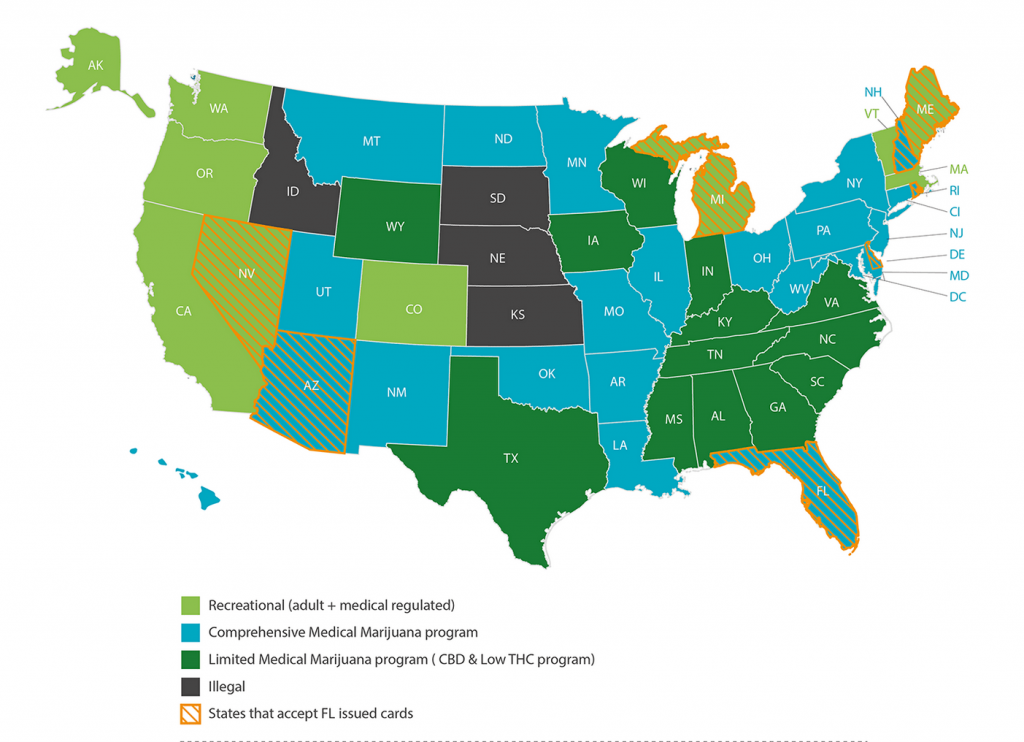
The replacement itself follows the same path as after a loss. The difference sits at the front of it: before you ask for a new card, file a police report. It takes one visit or one online form, and it is the document that answers the only awkward question that can come later — whether the card someone else was carrying was yours by consent.
What to put in the report
- When and where the card went missing, as precisely as you can manage.
- Your patient number, if you kept a copy of the card or a photo of it.
- Everything that was taken along with it — wallet, ID, bank cards, keys.
- Whether the card carried your name and photo, since that decides how usable it is to anyone else.
If the report cannot be filed — some departments will not take a report on a single card, or you are traveling and cannot get to a station — write down what happened, when you noticed and what you did about it, and keep the record with your replacement request. Programs differ on whether they ask for a report at all; where they do, they say so on the form.
One practical detail catches people out. A card taken inside a wallet usually means your driver’s license went with it, and a replacement request will ask you to prove who you are. Replace the ID first, then the card, in that order. Doing it the other way around usually means filling the same form twice.
The card in someone else’s pocket stops working as soon as yours is reissued — what happens to the old card explains why that is automatic rather than something you have to ask for.
The card is not lost — it never arrived
This case looks like a loss and is handled as something else entirely. If the program approved you and the card simply has not turned up, nothing has been lost yet, and asking for a replacement too early is the one move that reliably makes it slower: a second request can supersede the first and send you back to the start of the queue.
Start with the status of the application, in the account where you filed it. Approved and mailed is a different situation from approved and waiting to be printed, and only one of the two involves the post office at all. Then read your address the way a mail carrier would, including the apartment or unit number. The most common reason a card does not arrive is a character that was wrong when it was typed, or a move that happened after the application went in.
When you do report it, use the program’s own wording for non-delivery rather than describing it as a loss. The two go to different places internally, and the one you choose is printed on the record.
If the program confirms the card was mailed and it still never turns up, you are back to a replacement request — the steps for that are the same ones above.
You lost the recommendation you already paid for
Here is the good news that most people in this situation do not expect: a signed recommendation is an electronic document, and it is kept in your patient account. Losing your copy does not undo the appointment, and it does not mean paying for a second evaluation. You download the file again.
If the email address or phone number you used has changed since your visit, update it in the account before you go looking — that is usually why the copy you were sent never resurfaced. If you cannot get into the account at all, the recovery flow runs on the email address that was used at booking, so try that one first, even if you no longer use it day to day.
The one thing worth checking while you are in there is the expiration date. A recommendation and a state card run on their own clocks, and they rarely expire on the same day. A document that has run out is not a document you can replace — it is one you renew, which is a different conversation and is covered further down.
What happens to the old card once the new one arrives
This is the question that keeps people awake, and the answer is dull in the best way. When a replacement is issued, the card it replaces stops being valid. The number on it no longer matches a live record, so a dispensary checking it sees an inactive card — which means the stranger who found yours cannot buy anything with it, and neither can you.
That also settles what to do if the original turns up in a coat pocket two weeks later. It is not a spare. Destroy it rather than carrying both, because showing the wrong one at a counter looks like exactly the kind of mix-up nobody wants to explain.
Does losing the card put anything else at risk?
Being registered in a medical program comes with a set of protections, and patients reasonably worry that a missing card knocks them all out at once. It does not. The protections attach to your registration, and the registration is intact — the card is the receipt, not the entitlement. What a missing card takes away is your ability to demonstrate it on the spot, which matters precisely at the moments you would want it: at a dispensary counter, or in a conversation with law enforcement.
Three areas come up often enough to be worth naming plainly, and all three are decided by state law rather than by anything a replacement form does:
- Work. Some states protect registered patients from being fired or refused a job over their status, some protect only off-duty use, and some offer nothing at all. Your card being missing does not change which of those applies to you.
- Firearms. Federal law does not recognize a state medical program, and that conflict exists whether your card is in your wallet or not. Nothing about a replacement makes it better or worse.
- Your records. Program registries are confidential, and the record that survives the lost card is held under those same rules. Being on a registry is not a public fact.
Where these lines fall in your own state is not something an article can answer honestly for every reader — the differences are large and they change. The section below on how your state handles this is the place to go from here.
Can you buy at a dispensary while the replacement is processed?
The honest answer is that it depends on your state, and that the dispensary is not the one deciding. What a budtender checks is not the piece of plastic but the live record behind it. In some programs the register can be queried at the counter and a valid photo ID is enough to find you. In others, the card has to be physically present, and no amount of good will at the shop changes that.
So the useful thing to bring is not an argument but the best evidence you have: your government-issued ID, your patient number if you know it, the confirmation of your replacement request, and a copy of your current recommendation. In a state where the record can be verified, that is usually the whole conversation. In a state where it cannot, being turned away is the program working as designed, and it is not personal.
What you should not do is treat a pending request as a temporary license, or borrow someone else’s card. Both of those are the kind of mistake that outlives the missing card by years.
If you are still weighing up what a card does for you once you have it back, the questions patients ask most often are answered on our medical card FAQ page.
Replacement or new evaluation — which one do you actually need?
A fair number of people who come looking for a replacement need something else. The document did not go missing; it quietly ran out. The two situations feel identical from the dispensary counter and are nothing alike on paper, so it is worth checking which side of the line you are on before you fill in a single form.
Where the document is
Looks like a replacement
The document physically disappeared: lost, taken or never delivered. Its dates are still good.
Looks like a new evaluation
The document is right there in front of you, and the expiration date on it has passed.
What the program’s record says
Looks like a replacement
Your registration is active, and the state can confirm it without the card in your hand.
Looks like a new evaluation
The registration has lapsed, so there is nothing live to reprint.
Whether a physician has to see you
Looks like a replacement
No appointment is involved. Nobody re-examines you to reprint a card you already earned.
Looks like a new evaluation
A licensed physician has to see you again before anything else can move.
This also answers a question that arrives with it: whether a lost card means proving all over again that you qualify. It does not. A replacement does not reopen the question of your condition — that review belongs to an evaluation, and it only happens when the recommendation has expired. If yours has, the renewal runs by your own state’s rules — pick your state below to see how that program spells them out.
How this works in your state
Every program writes its own rules for replacements: where the request is filed, what it costs, how long it takes, whether a police report is expected after a theft, and whether an electronic copy of the card counts at the counter. Some states run the whole thing through a state portal; in others there is no state card to replace at all, and your physician’s recommendation is the document that matters.
State law also settles what happens when the missing card belongs to a caregiver — the person a program registers to buy or carry on a patient’s behalf. In the states that register caregivers at all, that card is a separate document with its own number, so it is replaced through the program that issued it rather than from the patient’s side of the account. Programs differ on the rest: some ask the patient to confirm the arrangement again before a caregiver card is reprinted, some want the proof of caregiver status resubmitted, and some tie the caregiver card’s expiration to the patient’s, which changes whether a replacement or a renewal is what is actually needed. Where a fee and a processing window apply, they are the program’s own and are listed next to the patient ones.
That is why this article stops at the principle. The numbers belong where they are kept current — on our guides to state laws and regulations, and on the page for the program you are registered with.
Who decides, and how the appointment goes
If it turns out you need an evaluation rather than a replacement, here is what that involves. A physician licensed in your state reviews your condition and decides whether cannabis is appropriate for you — the decision is theirs, and no service can promise it in advance. The card itself is issued by the state, not by us.
The whole thing happens through telemedicine, which simply means the physician sees you remotely instead of in an office: you do not travel anywhere and you do not sit in a waiting room. The request form takes about five minutes to fill in. The appointment itself runs about fifteen. The start time is agreed with the physician rather than fixed by a clock, and appointments do run over, so it is worth keeping an hour free rather than a minute. Once you have been seen and the physician signs, the recommendation usually reaches you within 24 to 48 hours.
Across 250 reviews from patients in the states where we are licensed. We do not sort them by score and do not hide the low ones.
- 150,000+patients evaluated — everyone who has been through an appointment with us, in every state where we are licensed
- Since 2017doing only this: online evaluations for medical cannabis programs, and nothing else on the side
Those ratings come from patients in the states where we are licensed, and they are not filtered: reviews are not sorted by score and the low ones are not hidden. Individual patient stories about a missing card are not reprinted here — a lost document is a private matter, and we publish only what a patient has agreed to have published.
If an evaluation is what you need, the next step is picking the state you are registered in.
See how the appointment worksOur physicians and their licenses are listed on the doctors page.
Questions patients ask after losing a card
-
Do I have to pay again?
Not for the recommendation. It is stored in your patient account and you can download it again as many times as you need while it is valid. The state card is separate: many programs charge their own fee to reprint one, and the amount is set by the program, not by us. You pay for a new evaluation only when the recommendation itself has expired.
-
Can I go to a dispensary without the physical card?
Sometimes, and it is your state’s rule rather than the shop’s preference. Where staff can verify your registration in the program’s system, an ID and your patient number are often enough. Where the card has to be shown, there is no way around it. Bring your ID, your patient number and the confirmation of your replacement request, and ask before you shop rather than at the register.
-
My card was stolen — do I need a police report?
Not every program asks for one, but filing it is still the sensible first move: it puts on record that the card left your hands without your consent, which is the one thing you cannot prove afterwards. If your department will not take a report for a card alone, keep your own written note of when and where it happened and attach it to the replacement request.
-
I moved — where will the new card go?
To whatever address the program has on file, which is why the address comes before the request and not after it. Update it in your program account first, then ask for the replacement. If you moved to a different state, that is a bigger change than an address: programs register residents, and a new state generally means registering there from the beginning.
-
Is my old card still valid if I find it?
No. Once a replacement has been issued, the earlier card is inactive and cannot be reactivated — for you or for anyone who picked it up. If it resurfaces after your new one arrives, destroy it rather than keeping it as a spare.
What to do next
-
Work out which document is missing
The signed recommendation and the state card are replaced in different places, and everything else follows from that one answer.
-
Ask for the replacement where the document was issued
Your patient account for the recommendation, your state program for the card. Check your address before you submit either one.
-
If the date has run out, book an appointment instead
An expired recommendation is renewed rather than replaced, and that starts with a physician licensed in your state.
Picking your state opens the page for the program you are registered with, with what an appointment there involves and what it includes. Nothing is charged for looking. If you do go ahead, the request form takes about five minutes and the appointment itself about fifteen; the start time is agreed with the physician, so it is worth keeping an hour free rather than a minute. Once you have been seen and the physician signs, the recommendation usually reaches you within 24 to 48 hours. The decision belongs to the physician, and the card itself is issued by your state.
- Which states accept an out-of-state medical marijuana card — useful if you are moving, or if the card went missing while you were away from home.
- Getting a medical card when your diagnosis is not on the list — what happens at the evaluation if you are starting again rather than replacing.
- Traveling with marijuana — what your card does and does not do once you cross a state line.
This article is for information only and is not medical or legal advice. Whether cannabis is appropriate for you is decided by a licensed physician at an appointment, and the card itself is issued by your state program.



Not true at least not in Florida. I lost my caregiver card but since I am in the system & have a valid DL I have had no issues.
I can imagine how stressful it must be to lose your MMJ card, and it’s awesome to have a guide like this to follow in case it happens. I appreciate the step-by-step advice on what to do and who to contact, it makes the process seem way less daunting. Just curious, has anyone here actually lost their card and followed these steps? How was your experience?
Hello, if I issued a card through you, is the procedure for reissuing a card also paid? Someone stole my wallet, so my card was lost along with it, although it is very, very much needed. Thanks in advance!
I lost my card and would like to get a new one, please
hi id like to get my md card renewed for allergies thank you
Lost my card I really need a new one
I need my California medical card to make purchases in Arkansas.