


Medical Marijuana Card in Tampa, FL: How to Get One


Yes. If you live in Tampa or anywhere in Hillsborough County, you apply to the same program as every other Florida resident: the State of Florida’s medical marijuana program, run by the Office of Medical Marijuana Use (OMMU) at the Florida Department of Health [1]. There is no separate Tampa or county office.
You qualify if you are a Florida resident (year-round or seasonal) with a condition the law covers, and a qualified Florida physician decides that after an exam. Under Florida law your first exam is in person [1]. The physician enters the certification in the state registry, and you then apply for the state ID card online.
In short
-
Who qualifies
A Florida resident, year-round or seasonal, with a condition named in the law or one a physician finds comparable.
-
Who decides
A qualified physician with a Florida license. They issue a physician certification, not a prescription.
-
How it’s recorded
The certification goes into the Medical Marijuana Use Registry. The state then issues your Registry ID card.
-
State fee
$75
Paid to the State of Florida for the ID card, separate from the physician visit (OMMU FAQ) [2].
How does Florida’s medical marijuana program work for Tampa residents?
Florida legalized medical marijuana when voters passed Amendment 2 in 2016. The legislature then wrote the rules into section 381.986 of the Florida Statutes through Senate Bill 8A in 2017 (Bill 8A) [3]. The program belongs to the State of Florida, and the Office of Medical Marijuana Use (OMMU) runs it. A patient in Tampa, Brandon or Plant City goes through exactly the same steps.
-
Physician certifies
After an in-person exam
-
Registry (MMUR)
Your record and orders
-
OMMU ID card
You apply and pay $75
-
Treatment center
Fills the physician’s order
The physician’s document is called a physician certification. It is not a prescription: a prescription goes to a pharmacy, while a certification is an entry in the Medical Marijuana Use Registry that says which amounts and routes the physician ordered [1]. Only a licensed Medical Marijuana Treatment Center (MMTC) may fill that order, and the state keeps the official list of MMTCs [4].
What you hold at the end is a Registry ID card from OMMU. It costs $75, it is valid for one year, and it is what a treatment center checks along with your photo ID [5]. The law also lets a patient name a caregiver, an adult who is registered to help with the patient’s medical use; a caregiver must be 21 or older, live in Florida and complete a state course [1].
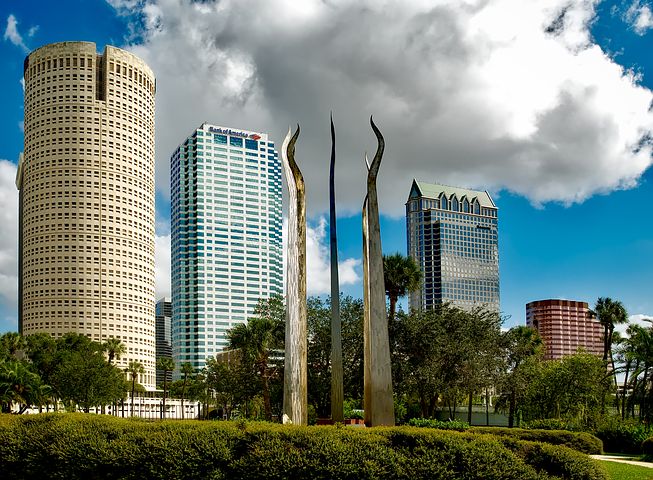
Why the medical route is the one that counts in Tampa
Most people who look into this have lived with something for a long time: back pain that outlasted the physical therapy, nightmares years after a deployment, nights of broken sleep, nausea through chemotherapy. Chronic pain is by far the most common reason people register for medical cannabis in the United States [6].
In Florida the medical program is the only legal path. Amendment 3, which would have allowed adult use, won 55.9% of the vote in November 2024 but needed 60% to pass [7]. Products sold in convenience stores and smoke shops as hemp or delta-8 are outside the program: no physician order, no registry, no MMTC testing rules. A registered patient buys only from an MMTC, and a physician reviews the plan at least every 30 weeks [1].
The full set of state rules is in our Florida cannabis law guide
What does Florida law allow a Tampa patient?
These rules come from the state, so they are the same in South Tampa, New Tampa and the rest of Hillsborough County. Each row links to the official text.
| Topic | Florida rule |
|---|---|
| Medical use | Legal for registered patients Amendment 2 (2016), section 381.986 [1] |
| Adult use | Not legal Amendment 3 (2024) got 55.9%, short of the 60% required (official results) [7] |
| Flower for smoking | Up to 2.5 oz per 35 days from an MMTC Possession: up to 4 oz in a form for smoking or a 70-day supply, unless the state approves more [1] |
| Physician certification | Up to 210 days A new evaluation at least once every 30 weeks [1] |
| Registry ID card | $75, valid 1 year Renewal opens 45 days before it expires (OMMU cards page) [5] |
| Sales tax | Exempt Marijuana and delivery devices, section 212.08(2)(l) [8] |
| Home growing | Not allowed Only licensed MMTCs may grow, process and dispense [2] |
| Where use is barred | Public places, vehicles, public transportation, school grounds Also at work unless your employer permits it; low-THC products not for smoking have narrow exceptions [1] |
| Out-of-state cards | Not accepted “The state of Florida does not offer reciprocity” (OMMU FAQ) [2] |
Two of these rows answer the questions we hear most from Tampa patients. Your card from another state does not work here, so a new Florida resident starts from the beginning. And because the certification lasts at most 210 days while the ID card lasts a year, you renew with the physician more often than with the state.
What changes for a patient inside Tampa city limits?
Your protection as a patient comes from state law. The City of Tampa adds a few rules of its own, and they matter mostly for where you are and who you work for.

-
Tampa Police
The city lists “the decriminalization of small amounts of marijuana” among Tampa Police actions on its task force on policing page [9]. That is a policing choice, not a patient right, and it does not replace registration.
-
City code 14-62
A 2016 city ordinance made possession of 20 grams or less a civil citation. According to the University of Tampa’s Florida laws page, it applies only inside the City of Tampa and only Tampa Police enforce it, not the county sheriff [10].
-
City of Tampa employees
The city’s personnel manual (section B33.2, July 2025) bans being under the influence on duty and allows pre-employment, post-accident and random tests. It makes no exception for patients [11].
-
City parks
The parks rules say “No Alcohol or Illegal Drugs Allowed” [12]. State law already bars medical use in any public place, so the Riverwalk and city parks are off limits for patients too [1].
Work, driving and travel are covered below: what a Florida card protects
Which conditions qualify for a medical card in Florida?
Florida law names ten conditions and then leaves room for the physician’s judgment [1]. Lists like this differ from state to state, which is why physicians check their own state’s statute rather than a general list [13].
Named in Florida law 10
- Cancer
- Epilepsy
- Glaucoma
- HIV positive status
- AIDS
- PTSD
- ALS
- Crohn’s disease
- Parkinson’s disease
- Multiple sclerosis
By the physician’s judgment 3
- A condition of the same kind or class
- A terminal condition
- Chronic nonmalignant pain
“Same kind or class” means a condition comparable to the named ones. “Terminal condition” must be diagnosed by a physician other than the one issuing the certification. “Chronic nonmalignant pain” is pain caused by a qualifying condition that lasts beyond its usual course [1].
Does PTSD qualify in Florida?
Yes. Posttraumatic stress disorder is written into the law by name, so a veteran from MacDill or anyone else with a PTSD diagnosis does not need to argue that it is comparable to something else [1]. Bring whatever records you have; the physician still decides whether medical cannabis is appropriate for you.
Anxiety, insomnia and migraine are not on the named list. A physician can consider them under “same kind or class” when they are severe and well documented, and that call is made at the exam, not by a website.
Read about specific diagnoses in our conditions library
Who qualifies in Tampa, and what should you have ready?
You need three things: Florida residency, a qualifying condition from the list above, and a qualified physician’s certification. Adults show residency with a Florida driver license or Florida ID card. Seasonal residents, the people who spend part of every year in Tampa Bay, can qualify too if they live here at least 31 days in a row each calendar year and keep a home elsewhere [1].
Patients under 18 are handled differently by law: a second physician must agree, only a parent or guardian registered as caregiver may buy or give the medicine, and forms for smoking are allowed only in narrow cases that include a terminal diagnosis and a board-certified pediatrician’s agreement [1].
Where are you now?
Choose the line that sounds like you. The list shows what to have ready for that case, and you can tick off what you already have.
Pick the line that sounds like you.
Year-round Florida resident, first card
This is the standard route. Your Florida license or ID card is your proof of residency, and the first exam with the physician is in person.
What to have ready
Tick what you already have.
Seasonal resident
Florida counts you as a seasonal resident if you stay here at least 31 days in a row each calendar year, keep a temporary home here, return to your home state each year, and vote or pay income tax there. Instead of a Florida license you send the state two documents with your Florida address [5].
What to have ready
Tick what you already have.
Next: book the first in-person exam with a qualified Florida physician.
Moved to Tampa from another state
Your old card stays behind: Florida does not accept medical cards from other states [2]. The state asks adults for a Florida driver license or Florida ID card, so getting that comes first [1].
What to have ready
Tick what you already have.
Next: book the first in-person exam with a qualified Florida physician.
Renewing in Tampa
There are two clocks. Your physician certification lasts up to 210 days, and the Registry ID card lasts one year. A physician who examined you in person may renew your certification through telehealth [1].
What to have ready
Tick what you already have.
Next: check both end dates, then book the renewal visit with the physician who examined you.
How to get a medical marijuana card in Tampa, step by step
The order is the same for everyone in Florida. Two of the times below are ours; the state’s processing time belongs to OMMU and is labeled that way.
-
Check your condition
Find your diagnosis on the Florida list, or note how your symptoms limit your days so the physician can judge whether they are comparable.
-
Get your documents ready
A Florida driver license or ID card, or two address documents if you are a seasonal resident. The checklist above sorts this by your situation.
-
In-person exam with a qualified physician
The physician reviews your history and medications and decides. You agree on the time with the physician, so plan for an hour around it. If you qualify, the certification goes into the state registry.
-
Apply for the state ID card
Log in to the Medical Marijuana Use Registry, complete the application and pay $75. OMMU says online applications average about 10 business days [2].
-
Fill the order at a licensed treatment center
Once approved, a licensed MMTC fills the physician’s order; here is what happens in between.
The Florida page shows the visit price and how booking works.
See how the Florida appointment worksWhat is a 420 evaluation in Tampa, and can it be done online?
Is a “420 evaluation” a real medical visit?
Yes. “420 evaluation” is just the everyday name people search for. In Florida it is an exam by a qualified physician who decides on medical grounds.
A qualified physician in Florida holds an active, unrestricted Florida MD or DO license and has passed a 2-hour course and exam on medical marijuana [1]. At the visit they ask about your symptoms, how long they have lasted, what you have tried and what you take now. If cannabis fits, they record how much and in which forms, and they explain what to watch for.
Can it be done online? Partly. Florida requires the first certification to follow an in-person physical exam, with the physician in the same room as you. Since July 1, 2023, a physician who has already examined you in person may handle later renewals through telehealth, which means a remote appointment over a secure connection (HB 387) [1] [14]. The state application and the $75 payment are online for everyone.
So the honest answer for a first card in Tampa: the paperwork is online, the first exam is not. How our Florida appointment is arranged is described on the Florida medical card page.
Across 250 reviews from patients in the states where we are licensed. We do not sort them by score and do not hide the low ones.
- 150,000+patients evaluated – everyone who has been through an appointment with us, in every state where we are licensed
- Since 2017doing only this: online evaluations for medical cannabis programs, and nothing else on the side
How do you check a Tampa doctor’s Florida license?
Searches for a medical marijuana doctor in Tampa return a long list of clinics. You can check any physician yourself in a few minutes, on state websites, before you pay anyone.
-
Check the license
Search the name in MQA License Verification, the Florida Department of Health lookup. The license should be active and unrestricted, as an MD or a DO [15].
-
Confirm they are a qualified physician
Only physicians who passed the required 2-hour course and exam may order medical marijuana. Look them up in the MQA Medical Marijuana Qualified Physician search or on the OMMU qualified physician list [16].
-
Ask how the first exam works
A first Florida certification needs an in-person exam. Ask where it happens and who will see you.
Red flags
- Approval is promised before anyone has looked at your history. The physician decides at the exam.
- You are offered a “prescription”. Florida physicians issue a certification in the state registry.
- You are pushed to pay today or lose a price.
What happens after the doctor certifies you?
This is the part people call us about most: “I got certified, can I go now?” Not yet. The certification and the state’s approval are two separate steps.
-
Certified by the physician
Where you are
Your certification is in the Medical Marijuana Use Registry.
What you can do now
Log in to the registry and submit your ID card application. You cannot buy yet.
-
Application submitted
Where you are
You paid $75 and OMMU is reviewing. An application counts as complete only when all information is in and the payment has cleared [17].
-
Application approved
Where you are
OMMU emails you that the application is approved.
What you can do now
That email together with a photo ID works as a temporary card at a licensed MMTC until the plastic card arrives [18].
-
Plastic card arrives
Where you are
The Registry ID card comes by mail.
What you can do now
Use it with your photo ID. It expires one year after approval [5].
The treatment center can’t find your certification
A treatment center fills an active order from your physician, so it can only see what is in the registry. Log in to the Medical Marijuana Use Registry and check two things: that your application status is approved, and that your certification has a current order for the form you asked for. If the order has run out or covers a different route, the physician has to update it. Questions about the card itself go to the OMMU patient helpline at (800) 808-9580 [2].
A licensed treatment center is not a hemp or delta-8 shop. Registered patients may buy only from a Medical Marijuana Treatment Center on the OMMU list; buying from anyone else is a violation of state law [1] [4].
Already booked with us? Your appointments are in your account
How much is a medical marijuana card in Tampa, Florida?
You pay twice, to two different parties, and it helps to keep them apart.
-
Paid to Dr. Weedy
Physician visit
The price and what it includes are listed on the Florida medical card page.
-
Paid to the State of Florida
$75
Registry ID card, paid in the registry after you are certified, plus a $2.75 fee for paying online (OMMU) [5].
The same $75 applies each year when the ID card is renewed, and the physician’s certification is renewed separately [5].
Smoking isn’t the only form: what Florida allows and what to ask your physician
Florida law lets the physician order medical marijuana in several forms, and flower for smoking is one of them [1]. Each form avoids some problems and keeps others. The choice of form and amount is made with your physician; this page only lays out what to ask about.
Inhaled: flower for smoking and vaporization
Effects start within minutes and fade sooner than with other forms. Smoke is a product of burning plant material, and vapor is a hot aerosol that travels the same airways, so both reach the throat and lungs. Ask about this if you have asthma, COPD or a chronic cough. Smoking is barred in public places and anywhere the law excludes [1].
Swallowed: capsules, oils and edibles
Nothing reaches the airways. The effect starts later and lasts longer, and the substance passes through the liver before it reaches the blood. A second dose taken because the first “didn’t work” is a common reason people take more than they meant to.
Under the tongue: tinctures and oils
Drops held under the tongue avoid the airways. Some of the dose is still swallowed, so the liver and drug interactions stay part of the conversation with your physician.
On the skin: topicals and patches
Creams and balms act mostly where they are applied. Transdermal patches are different: they are designed to deliver the substance into the blood, so they are discussed like any form that acts on the whole body.
Any form
Whatever the route, THC affects attention and reaction time, can cause drowsiness, and can interact with other medicines, especially ones that also cause drowsiness. Do not drive after using it. Bring a full list of what you take to the exam.
Prescription drugs approved by the FDA, such as Epidiolex (cannabidiol) and dronabinol, are a separate category. They come from a pharmacy with a regular prescription, not from a treatment center with a Florida card.
Wondering about your own medicines? Start with the FAQ answer on medications
What a Florida medical card protects in Tampa, and what it doesn’t
A registry card makes your medical use legal under Florida law. It does not change federal rules or your employer’s policies. Open a topic to see the details.
WorkLimited
Florida law does not require an employer to accommodate medical use at work, and it keeps drug-free workplace programs in place. Use at your workplace is allowed only if your employer permits it [1]. City of Tampa employees fall under the city’s drug testing policy described above.
DrivingNot covered
Use in a vehicle, a boat with a motor or an aircraft is outside protected medical use, except for low-THC products not meant for smoking [1]. Driving while impaired is illegal whether or not you have a card.
FirearmsUnsettled
Federal rules changed twice in 2026. In January the ATF rewrote its definition of an “unlawful user” of a controlled substance [19], and in April the DEA moved marijuana under a state medical license to Schedule III [20]. Neither rule speaks directly about patients who own guns. If this applies to you, ask a lawyer before you buy a firearm or register.
CDL and DOT jobsUnsettled
Federal drug testing for truck drivers, pilots and other safety jobs follows DOT rules. Under 49 CFR 40.151(e), the reviewing physician may not treat a physician’s recommendation of a Schedule I drug as a reason to call a positive test negative [21]. With the 2026 rescheduling, ask your employer’s testing program how it treats Florida patients before you apply.
TravelLimited
Florida law excludes use on public transportation and in aircraft, vehicles and motorboats [1]. Your card is issued under Florida law, and every other state sets its own rules for visitors, so check the rules of the place you are going before you pack.
Privacy of the registryProtected
Your identifying information in the registry, on your ID card application and in the physician’s certification is confidential and exempt from Florida’s public records law under section 381.987 [22].
How long does a Florida certification last, and how do you renew it?
Florida runs two separate clocks. The physician certification lasts up to 210 days, because the law asks the physician to evaluate you at least once every 30 weeks [1] [23]. If that physician examined you in person before, the renewal visit can be by telehealth.
The Registry ID card lasts one year from approval. You can renew it in the registry starting 45 days before it expires, for the same $75 [5]. Start both a few weeks early so there is no gap between orders. Bills that would have stretched the certification to a year (2026) and the card to two years (2025) did not become law [24] [25].
Renewal questions specific to Florida are answered in the Florida medical card FAQ
Medical marijuana card in Tampa: FAQ
Can I get a medical marijuana card online in Tampa?
Part of it. The state application and the $75 payment are online in the Medical Marijuana Use Registry. The first certification requires an in-person exam with a qualified physician; renewals with the same physician can be done by telehealth [1].
I got certified. Can I go to a treatment center now?
Does Florida accept my out-of-state card?
Is delta-8 the same as medical cannabis?
Can CDL drivers or federal employees get a card?
Florida law does not bar them from registering, but a state card does not override federal drug testing. DOT rules (49 CFR 40.151(e)) govern safety jobs [21], and federal policies changed in 2026. Check with your employer’s testing program, and read the protections section above.
Is medical cannabis safe with my medications?
That depends on what you take, and it is exactly what the exam is for. THC and CBD can add to the drowsiness caused by other medicines and can change how some medicines work in the body. Bring a complete list, including supplements, and do not change your other treatment on your own.
More answers for Florida patients are in the Florida medical card FAQ
Your next step toward a Florida medical card from Tampa
Approval is the physician’s decision; the State of Florida registers you.
What changed in Florida’s program since 2023
- July 1, 2023Renewals by telehealth allowed with the physician who examined you in person (HB 387) [14].
- November 2024Amendment 3 on adult use failed with 55.9%, below the 60% needed [7].
- 2025 and 2026Bills for a two-year ID card and a one-year certification died; the 210-day and one-year terms stay [24] [25].
- April 28, 2026The DEA moved marijuana under a state medical license to Schedule III at the federal level [20].
More Florida city guides
This article is for information only. Whether medical cannabis is right for you is decided by a physician at your appointment, and registration is handled by the State of Florida.
References
25 sources
- 1. Florida Legislature. Section 381.986, Florida Statutes: Medical use of marijuana. 2026.
- 2. Florida Office of Medical Marijuana Use. Frequently Asked Questions. 2026.
- 3. The Florida Senate. SB 8-A: Medical Use of Marijuana. 2017.
- 4. Florida Office of Medical Marijuana Use. Medical Marijuana Treatment Centers. 2026.
- 5. Florida Office of Medical Marijuana Use. Registry Identification Cards. 2026.
- 6. U.S. Trends in Registration for Medical Cannabis and Reasons for Use From 2016 to 2020 : An Observational Study. DOI: 10.7326/M22-0217 PMID: 35696691
- 7. Florida Division of Elections. Amendment 3, Adult Personal Use of Marijuana: official results. 2024.
- 8. Florida Legislature. Section 212.08, Florida Statutes: Sales, rental, use tax exemptions. 2026.
- 9. City of Tampa. Mayor’s Community Task Force on Policing. 2025.
- 10. The University of Tampa. Wellness Services: Florida Laws. 2026.
- 11. City of Tampa. Personnel Manual, Executive Order No. 2025-12. 2025.
- 12. City of Tampa. Parks and Recreation Rules and Regulations. 2026.
- 13. Medical Marijuana in the Mid-Atlantic Region. DOI: 10.32481/djph.2025.09.10 PMID: 41035715
- 14. The Florida Senate. CS/CS/HB 387: Medical Use of Marijuana. 2023.
- 15. Florida Department of Health, Division of Medical Quality Assurance. License Verification. 2026.
- 16. Florida Office of Medical Marijuana Use. Physicians. 2026.
- 17. Florida Office of Medical Marijuana Use. OMMU Weekly Update, October 30, 2026. 2026.
- 18. Florida Office of Medical Marijuana Use. Check the Status of Your Application. 2025.
- 19. Federal Register. Revising Definition of “Unlawful User of or Addicted to Controlled Substance”. 2026.
- 20. Federal Register. Drug Enforcement Administration final rule on marijuana in Schedule III, April 28, 2026. 2026.
- 21. U.S. Government Publishing Office. 49 CFR 40.151, Code of Federal Regulations. 2025.
- 22. Florida Legislature. Section 381.987, Florida Statutes: Public records exemption for medical marijuana information. 2026.
- 23. Florida Board of Medicine and Board of Osteopathic Medicine. Physician Certification Pattern Review Panel, 2026 Annual Report. 2026.
- 24. The Florida Senate. CS/SB 1032: Medical Marijuana. 2026.
- 25. The Florida Senate. CS/HB 555: Medical Marijuana. 2025.