


Can You Smoke Weed Out of a Tobacco Pipe?

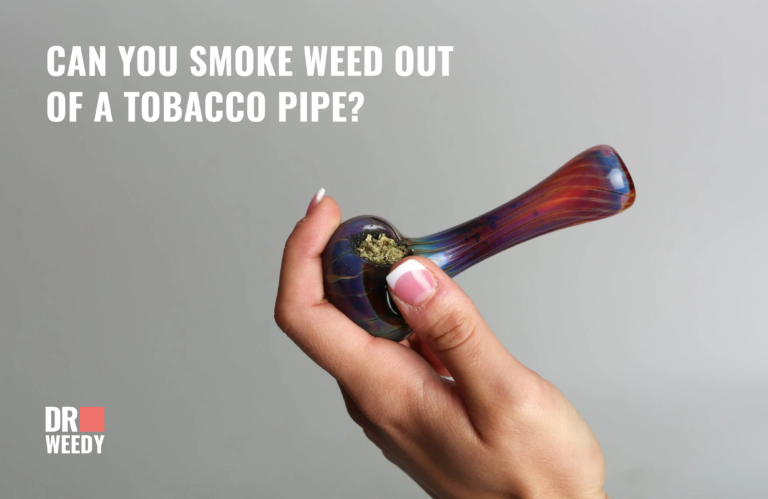
Technically, yes: cannabis will burn in a tobacco pipe. Medically, it is not a good idea. A pipe that has held tobacco keeps nicotine and tar in its walls, and any burning plant makes carbon monoxide and tar of its own. If cannabis is part of your treatment, there are ways to take it that involve no smoke at all.
The short answer
- It works: dried cannabis burns in any pipe bowl, including a classic briar, corn cob or meerschaum tobacco pipe.
- A used tobacco pipe adds old tobacco residue, nicotine included, to whatever you burn in it next.
- The pipe is the smaller issue. Smoke from any burning plant irritates the airways, whatever it comes out of.
- Using cannabis for symptoms? A licensed physician can help you pick a method that suits your lungs and your medicines.
Background: what is a tobacco pipe, and how is it different from a weed pipe?
Most people asking this question already have a pipe in hand: an inherited briar, a corn cob bought on a whim, a glass piece from a gift shop. Before getting to whether it is a good idea, it helps to know what that object was built for, because the design tells you a lot about what ends up in the smoke.
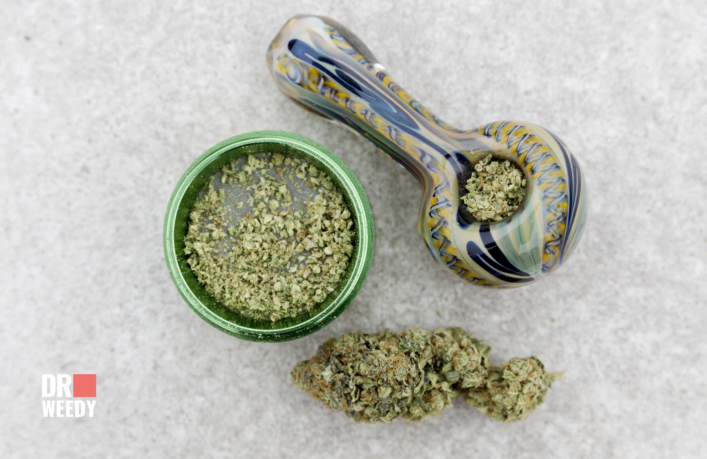
Weed and Tobacco Pipes
Pipes are among the oldest smoking tools people have, with a history that goes back to ancient times. The modern tobacco pipe took its familiar shape centuries ago and has barely changed since. As more states allow medical and adult cannabis use, people reasonably wonder whether one pipe can do both jobs.
Understanding Your Tobacco Pipe
A tobacco pipe has three parts. The bowl holds the tobacco. The shank connects the bowl to the stem, which ends in the mouthpiece. Classic pipes are carved from briar (the root burl of a heath shrub) or made of meerschaum (a soft white mineral), corn cob or clay. Pipe smokers deliberately let a thin layer of carbon, called the cake, build up inside the bowl. That layer is made of burned tobacco, tar and nicotine, and in a porous bowl it never fully comes out.
So when people ask what a tobacco pipe is, the honest short version is: a slow-burning tool designed for loose-cut tobacco, made from materials that soak up whatever passes through them.
Tobacco pipe vs weed pipe: the difference
The difference between a tobacco pipe and a weed pipe comes down to bowl size, material and how each one is cleaned. The table compares a typical tobacco pipe with a typical cannabis hand pipe.
| Feature | Tobacco pipe | Cannabis hand pipe |
|---|---|---|
| Bowl size | Larger and deeper, built for loose-cut tobacco that burns slowly | Small and shallow, built for a small amount of ground flower |
| Material | Briar or other wood, meerschaum, corn cob, clay; all porous | Mostly glass, sometimes metal, stone or silicone; mostly non-porous |
| Channel length | Long shank and stem; smoke cools on the way | Short channel, often with a side hole (carb) to clear the smoke |
| Filter | Often fitted for a 9 mm paper or charcoal filter | Usually no filter |
| Screen | None; loose tobacco stays in the bowl on its own | Often a metal or glass screen to stop fine plant bits |
| Cleaning | Pipe cleaners and a reamer; the cake is kept on purpose | Soaked and rinsed clean; nothing is meant to stay inside |
The practical takeaway: a cannabis pipe is meant to be cleaned back to bare glass, while a tobacco pipe is meant to keep a layer of old tobacco. That one design choice is behind most of what follows in this article.
Is there tobacco in weed? Is weed a tobacco product?
No. Cannabis and tobacco are two different plants, and cannabis contains no tobacco and no nicotine unless someone adds it.
Does weed have tobacco in it?
Cannabis comes from Cannabis sativa; tobacco comes from Nicotiana tabacum. They belong to different plant families. The active compounds in cannabis are cannabinoids such as THC and CBD. Nicotine, the addictive substance in tobacco, is not one of them.
Tobacco ends up in cannabis smoke in two ways only: when someone mixes the two on purpose (a spliff or a blunt, covered further down), or when cannabis is burned in something that previously held tobacco, such as a used tobacco pipe. That second route is exactly the question of this article.
Is weed considered tobacco?
Not under federal law. People also ask whether weed is a form of tobacco because both are dried leaf or flower that is smoked, and because some states apply their smoke-free rules to both. Legally, though, they are regulated separately: tobacco by the FDA’s Center for Tobacco Products, cannabis by state cannabis programs and federal drug law.
Taxes follow the same split. Cannabis is taxed under each state’s cannabis rules, not under tobacco excise taxes, and some states lower the tax for registered medical patients. The state section below explains where to check the rules that apply to you.
The Compatibility: can a wooden, glass or metal tobacco pipe work for cannabis?
Physically, almost any tobacco pipe can hold and burn cannabis. What changes from one pipe to the next is how much old residue it carries into the smoke and how hot it gets in your hand. Material decides both.
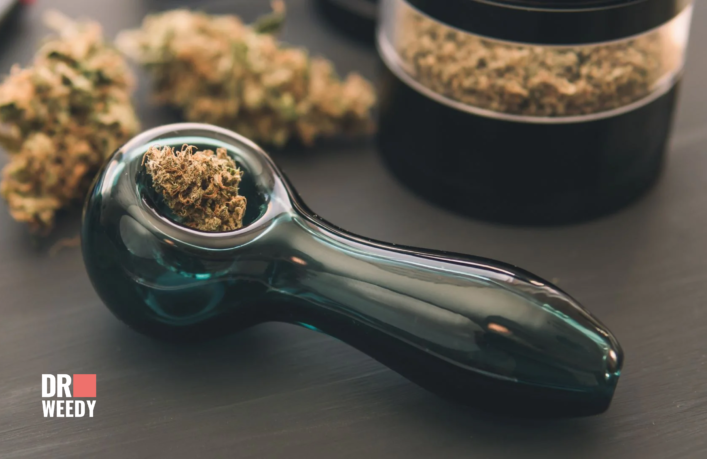
Design and Construction
Briar, meerschaum, corn cob and clay pipes are sturdy enough to take the heat of burning cannabis. The catch is that three of those four materials are porous: tiny pores in the wood, cob or mineral absorb tar and nicotine every time tobacco burns, and release some of it again when the bowl heats up. A tobacco bowl is also deeper and wider than a cannabis bowl, so small amounts of ground flower sit low and can be pulled into the shank.
Filter and Screen
Tobacco pipes usually have no screen, and many are fitted for a 9 mm paper or charcoal filter. A screen keeps plant bits out of the stem, and a filter catches some particles, but neither one makes smoke safe. Carbon monoxide is a gas and passes straight through, and a filter does nothing about residue stored in the bowl itself.
Here is how that plays out for the four pipes people ask about most.
Can you smoke weed out of a wooden tobacco pipe?
It will burn, but briar and other woods are porous and hold old tobacco tar for good. The bowl can also char if it runs hot, and charred wood adds smoke of its own.
Can you use a glass tobacco pipe for weed?
Glass is the most neutral option, because it is non-porous and can be cleaned completely. Until it is cleaned, residue in the stem still goes into the smoke, and the glass gets hot near the bowl.
Can you smoke weed out of a metal tobacco pipe?
Yes, and metal cleans fully, but it heats up fast and can get too hot to hold. Residue collects in the channel and goes into the smoke until it is cleaned out.
Can you use an old tobacco pipe for weed?
An old pipe carries years of cake. In a porous bowl, cleaning reduces that layer but cannot remove it, so tobacco residue and nicotine reheat into every fill.
Check your pipe
Two questions about the pipe you have. The answer describes the pipe, not your health.
Answer both questions to see what applies to your pipe.
- Residue —
- Heat —
- Nicotine —
Whatever the pipe, smoke from any burning plant contains carbon monoxide and tar.
If cannabis is part of your treatment, the way you take it is something to decide with a physician. See how a medical card evaluation works
Compare all pipe materials
| Material | Porous? | Holds tobacco residue | Heat |
|---|---|---|---|
| Briar or other wood | Yes | Porous wood soaks up tar and tobacco residue; it never cleans out completely. | The bowl can char if it runs hot, and charred wood adds smoke of its own. |
| Corn cob | Yes | Corn cob is very porous and absorbs residue quickly; it cannot be fully cleaned. | The cob can scorch or burn through at the bowl. |
| Meerschaum | Yes | Meerschaum is a soft, porous mineral; it absorbs residue and cannot be fully cleaned. | It holds heat well but is fragile and can crack. |
| Clay | Yes, if unglazed | Unglazed clay is porous and holds residue; glazed parts clean more easily. | Clay gets hot to hold and breaks easily. |
| Glass | No | Glass is non-porous and cleans fully, but residue builds up in the stem until it is cleaned. | Glass gets hot near the bowl. |
| Metal | No | Metal is non-porous and cleans fully, but residue collects in the channel until it is cleaned. | Metal heats up quickly and can get too hot to hold. |
| Not sure | Assume yes | If you can’t tell, assume it is porous: residue stays in it and does not clean out completely. | Heat depends on the material; a pipe that gets too hot to hold is a sign to put it down. |
What happens if you smoke weed out of a tobacco pipe?
The cannabis burns, you inhale smoke, and that smoke carries three things: what the plant releases when it burns, what the hot bowl adds, and whatever earlier smokers left behind in the pipe. The first is the same in any pipe. The other two are where a tobacco pipe differs.
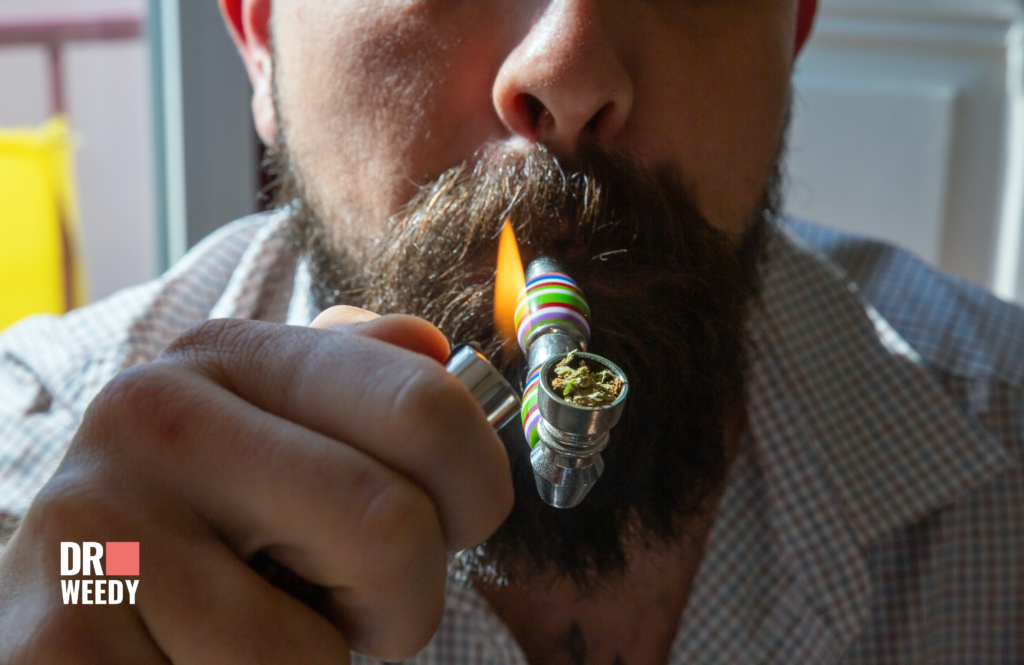
Why it isn’t only a question about the pipe
The reasons people reach for a tobacco pipe are understandable. It is already in the drawer, it needs no papers, and some hope a classic pipe is gentler than other ways of smoking. The trouble is that the risks are hard to see. A pipe that has carried tobacco holds nicotine and tar in its walls, and burning any plant produces carbon monoxide and tar regardless of the tool.[2] For someone with asthma, COPD or heart disease, that adds up faster. The useful question is less “will it work” and more “what is in the smoke, and is there a way to avoid it.” The rest of this article answers both, with sources.
Does a tobacco pipe work for weed?
Yes, in the mechanical sense. Dried cannabis flower lights and burns in a tobacco bowl. Because the bowl is built for a larger, denser fill, a small amount of ground flower burns unevenly and tiny pieces can be drawn into the shank. That is a nuisance more than a danger.
Can a tobacco pipe work for weed without the tobacco taste?
Rarely. People who try it commonly report that the smoke tastes like the pipe’s old tobacco. That taste is the cake reheating. It is a fair signal that tobacco residue is in the smoke.
Old residue: what’s left in the bowl
Anything left in a bowl reheats with the next fill. In a pipe that has carried tobacco, that means tar and nicotine from the cake can pass into cannabis smoke. Porous bowls (wood, cob, meerschaum, unglazed clay) cannot be cleaned back to bare material, so this does not go away with a wipe. How much nicotine actually transfers has not been well measured, so nobody can give you a safe number. Someone who is avoiding nicotine, or quit smoking, should treat a used tobacco pipe as a nicotine source.
What burning does
Burning plant material at high heat creates carbon monoxide, fine particles and tar, the sticky residue that carries many of the irritants and carcinogens in smoke. This happens with cannabis just as it does with tobacco. In a classic laboratory study comparing the two, smoking cannabis was linked to roughly five times the rise in blood carbon monoxide and about three times the tar inhaled compared with a tobacco cigarette, largely because of deeper inhalation and longer breath-holding.[3] A pipe changes the shape of the smoke path, not its chemistry.
How it may feel
People commonly notice harsh, hot smoke, coughing, a scratchy or burning throat and the lingering tobacco taste. A metal or glass pipe can also get uncomfortably hot to hold. These are signs of irritation, and repeated irritation is what drives the long-term airway symptoms described in the health section.
Coughing that doesn’t settle, wheezing or chest pain are a different matter; here are the symptoms that mean it’s time to see a doctor.
Advantages and Drawbacks of Using a Tobacco Pipe for Weed
An honest list looks lopsided, because the advantages are about convenience and the drawbacks are about health.
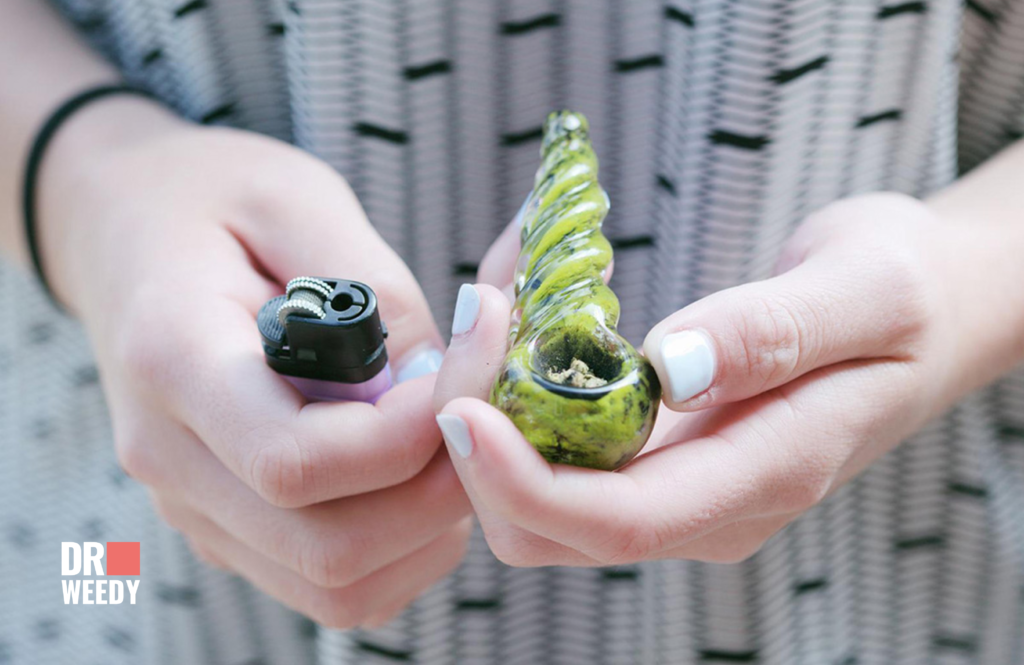
Pros
- You may already own one, so there is nothing new to buy.
- No rolling papers are needed.
- A long stem cools the smoke a little before it reaches your mouth, which some people find less harsh than a short glass pipe.
Cons
- A used tobacco pipe adds nicotine and tobacco tar from its cake to the smoke.
- Porous bowls absorb cannabis residue too and can never be fully cleaned.
- It is still combustion: carbon monoxide, tar and fine particles reach your lungs.
- A deep tobacco bowl burns small amounts unevenly, which makes it hard to tell how much you inhaled.
- Wooden bowls can char and metal pipes can get too hot to hold.
A cooler stem does not mean cleaner smoke. Cooling changes how the smoke feels, not what it contains, so the main health drawbacks stay the same whichever pipe you pick.
Mixing Weed and Tobacco in a Pipe
Some people put cannabis and tobacco in the same bowl on purpose. It burns, but it combines the risks of both and adds one cannabis alone does not have: nicotine addiction.
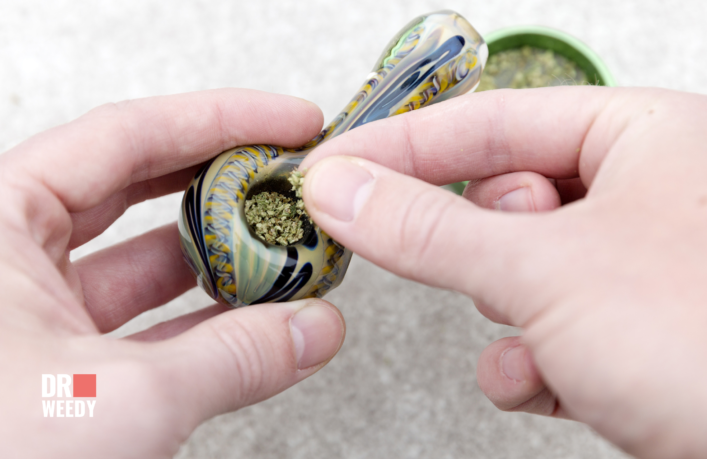
Spliffs, blunts and the tobacco and weed cigarette
A spliff is a hand-rolled cigarette with cannabis and loose tobacco inside. A blunt is cannabis rolled in a cigar wrapper or tobacco leaf, so it contains tobacco even when nothing else is added. A mixed pipe bowl is the same idea in a different tool, and so is what people search for as a “tobacco and weed cigarette.” Both plants produce harmful by-products when burned, and combining them means inhaling both sets at once.[3]
Nicotine dependence and tobacco use disorder
Nicotine is strongly addictive. When regular tobacco use turns into cravings, failed attempts to cut down and withdrawal, clinicians call it tobacco use disorder: the term used in the DSM-5 psychiatric manual, coded under F17 (nicotine dependence) in the ICD-10 diagnosis system. Research on people who use both substances finds that co-use is common, that each habit tends to reinforce the other, and that using cannabis with tobacco can make quitting tobacco harder.[4] In practice, a mixed bowl can keep a nicotine habit going long after someone believes they only use cannabis.
Tobacco replacements still burn
Searches for a “tobacco replacement for weed” usually lead to herbal smoking blends (mullein, damiana, raspberry leaf and similar). They contain no nicotine, which is a real difference. They are still plants being burned, so they still produce carbon monoxide, tar and fine particles. Swapping tobacco for an herbal blend removes the addiction risk, not the smoke.
Health Implications: is smoking weed bad for your lungs?
None of this depends on the pipe. A tobacco pipe adds tobacco residue on top, but the core lung effects come from smoke itself.
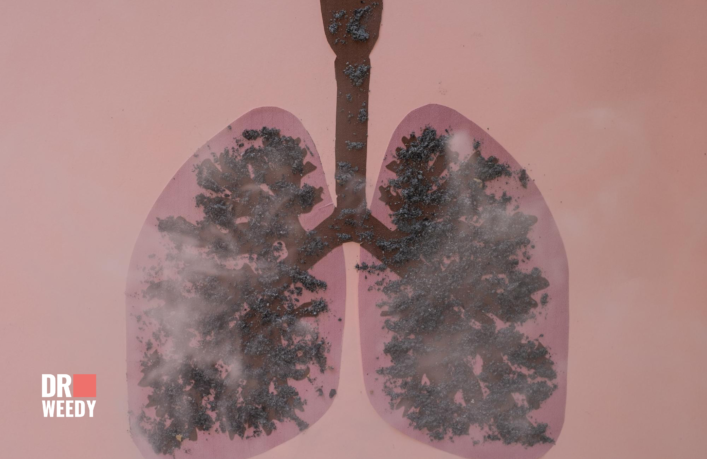
Smoke Inhalation
Whatever you burn, inhaling smoke irritates the lining of the airways. The CDC notes that cannabis smoke contains many of the same toxins, irritants and carcinogens as tobacco smoke, and that people who smoke cannabis often inhale more deeply and hold their breath longer, which increases exposure per breath.[2] Common results are cough, extra phlegm and wheezing.
Combustion By-products
Burning creates carbon monoxide, which displaces oxygen in the blood, along with tar and fine particles that settle in the lungs. California lists marijuana smoke under Proposition 65 as a chemical known to the state to cause cancer, and the state’s OEHHA listing for marijuana smoke explains what that means.[7] A Prop 65 listing reflects a hazard identified by the state; it is not a measure of how likely harm is for one person.
What research says about the lungs
The clearest finding is about symptoms: regular cannabis smoking is associated with chronic cough, phlegm and bronchitis episodes, and these tend to improve after people stop smoking.[6] Links to long-term lung function decline and to lung cancer are less clear, partly because many people who smoke cannabis also smoke tobacco, which makes the two hard to separate in studies.[6] “Unclear” is not the same as “safe.” For anyone with existing lung or heart disease, inhaled smoke of any kind is a risk worth taking seriously.
Smoking cannabis also has effects beyond the lungs. The same review found substantial evidence that cannabis use raises the risk of motor vehicle crashes, and that smoking cannabis during pregnancy is linked to lower birth weight.[6]
Whether cannabis is worth discussing for your symptoms depends on your condition, and state programs list the conditions they cover.
Who should avoid it, drug interactions and when to see a doctor
For some people, smoking cannabis from any pipe carries more risk than for others. Cannabis can also change how certain medicines work. This section is not a diagnosis; it is a list of situations to raise with a doctor first.
Who should avoid smoking cannabis
- People who are pregnant or trying to conceive, and people who are breastfeeding.[8]
- Anyone under 21, whose brain is still developing; medical programs have separate, stricter rules for minors.[8]
- People with asthma, COPD or other lung disease, where smoke can trigger flare-ups.[2]
- People with heart disease, heart rhythm problems or a past heart attack or stroke.[8]
- Anyone with a personal or family history of psychosis or schizophrenia.[6]
Whoever you are, don’t drive after using cannabis: it slows reaction time and raises crash risk.[6]
Medicines to ask your doctor about
Cannabinoids are processed by the same liver enzymes (the CYP450 family) as many common drugs, so they can raise or lower the levels of those drugs in your blood.[9] Ask before combining cannabis with:
- Blood thinners such as warfarin, where small changes in blood levels matter.
- Sedatives, sleep medicines, opioids and benzodiazepines, which add to drowsiness; read more on mixing cannabis and Xanax.
- Alcohol, which adds to impairment when combined with cannabis.
- Clobazam, a seizure medicine whose active by-product rises when taken with CBD.[10]
Alternatives to Tobacco Pipes: options that don’t burn
If the goal is to avoid tobacco residue, a clean cannabis pipe solves that. If the goal is to avoid smoke, the only real answer is a method that doesn’t burn the plant at all.
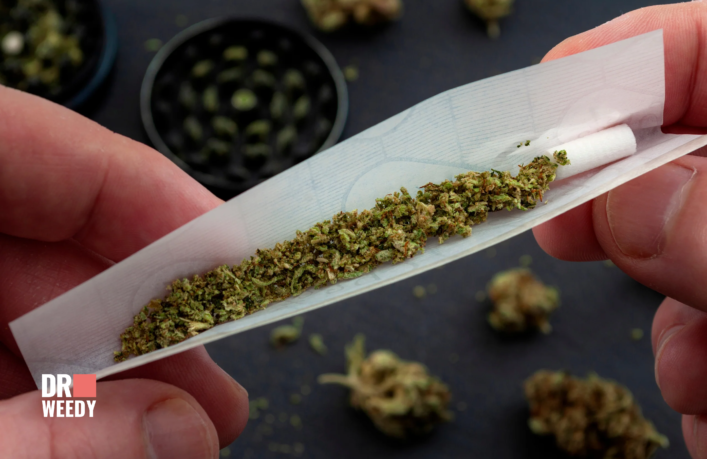
Rolling Papers
Rolling papers are portable and simple, and they come with no old tobacco residue. They are not an alternative to smoke, though: a joint is combustion just like a pipe, with the paper burning as well.
Vaporizers
A dry-herb vaporizer heats cannabis flower enough to release cannabinoids without setting it alight. In a small clinical study, vaporizing delivered THC with little or no rise in exhaled carbon monoxide, unlike smoking.[12] Lower exposure to combustion products is not the same as proven long-term safety, which hasn’t been studied well. Cartridge vapes are a separate case: the CDC linked the 2019 outbreak of serious lung injury (EVALI) mostly to THC cartridges from informal sources containing vitamin E acetate.[13] If you vape, use products from your state’s licensed, tested supply.
Forms you don’t inhale
Tinctures, capsules, edibles and topicals involve no smoke or vapor at all, so the lung questions in this article don’t apply to them. They have trade-offs of their own. Swallowed forms take much longer to start working than inhaled ones and last longer, which is why people sometimes take more before the first dose has kicked in. Topicals act where they are applied. A tincture held under the tongue sits between the two.
| Method | Burns the plant? | What to know |
|---|---|---|
| Tobacco pipe | Yes | Smoke, plus old tobacco residue and nicotine from the cake; see what happens. |
| Rolling papers | Yes | No tobacco residue, but still smoke, carbon monoxide and tar.[3] |
| Dry-herb vaporizer | No | Little carbon monoxide in a clinical study; long-term data are limited.[12] |
| Cartridge vape | No | Risk of lung injury from informal-market cartridges; use tested products only.[13] |
| Tincture | No | No lung exposure; starts slower than inhaling, faster than food. |
| Capsules and edibles | No | No lung exposure; slow to start and long-lasting, so effects are easy to overshoot. |
| Topicals | No | Applied to the skin for local effect; no lung exposure. |
Which of these makes sense depends on what you are treating and what else you take, which is the subject of the next section.
For medical patients: choosing a method with your doctor
If you use cannabis for a medical reason, the method is part of the treatment, not a matter of what’s in the drawer. The right choice depends on your diagnosis, your lungs and heart, and every medicine you already take. Physicians who recommend cannabis usually suggest the “start low, go slow” approach: begin with a small amount of a new product, wait to see how it affects you, and increase only gradually.
Questions to bring to your appointment
- Given my lungs and heart, should I avoid inhaled methods altogether?
- Could cannabis interact with any of my current medicines?
- For my symptoms, would a faster or a longer-lasting method suit me better?
- What CBD to THC balance makes sense to start with?
- What side effects should make me stop and call you?
- How will we decide whether it is helping?
Conditions where medical cannabis is studied
The National Academies found conclusive or substantial evidence that cannabis or cannabinoids can ease chronic pain in adults, reduce nausea and vomiting from chemotherapy, and improve muscle spasticity that people with multiple sclerosis report.[6] For many other conditions the evidence is limited or still emerging. Cannabis may help manage symptoms; it is not a cure.
Each state decides which diagnoses qualify for its medical program. These are called qualifying conditions, and the lists differ from state to state; in some programs the physician’s judgment carries more weight than the list itself. The recommendation comes from a physician licensed in your state, who reviews your history and decides whether cannabis is appropriate for you. The evaluation happens online, as a telehealth appointment, so there is no clinic to travel to.
Across 250 reviews from patients in the states where we are licensed. We do not sort them by score and do not hide the low ones.
- 150,000+patients evaluated — everyone who has been through an appointment with us, in every state where we are licensed
- Since 2017doing only this: online evaluations for medical cannabis programs, and nothing else on the side
How does this work in my state?
Cannabis law is set mostly by states, and the rules change often, so here are the principles; your state’s page has the specifics.
- Legal status. Federal law still treats cannabis as a controlled substance. Medical programs run under state law, and a state card protects you only under that state’s rules.
- Possession limits. How much a patient may buy and carry is set by each state, and medical limits are often higher than adult-use limits.
- Taxes. Cannabis is taxed under state cannabis rules, separately from tobacco taxes, and some states reduce taxes for registered patients.
- Growing at home. Some states let patients grow a limited number of plants; others don’t allow it at all.
Smoking in public and in rented housing
Smoking cannabis in public is banned in almost every state, including those with medical programs, and many state smoke-free laws cover cannabis the same way they cover tobacco. Landlords can usually ban smoking in their buildings even for patients. A pipe doesn’t change any of this: it is still smoking.
Work and drug tests
Whether a medical card protects your job depends on the state. Some states bar employers from penalizing registered patients for use off the clock; others offer no protection, and federal jobs and safety-sensitive roles follow federal rules. A card does not make a positive drug test go away, and no state protects using cannabis at work or working impaired.
Firearms
Federal law bars anyone who is an “unlawful user” of a controlled substance from having guns or ammunition, under 18 U.S.C. §922(g)(3).[14] Federal agencies apply this to state medical cannabis patients too, and courts are still working through challenges to it. If you own firearms, talk to a lawyer in your state before you apply.
Privacy
What you tell a physician during your evaluation is protected health information under HIPAA, the federal medical privacy law.[15] State patient registries have their own confidentiality rules, and access to them is generally limited to authorized agencies and licensed sellers.
Limits, taxes, growing rules and the list of qualifying conditions for each state are collected in our cannabis laws and regulations by state.
This section explains general principles and is not legal advice.
Conclusion
You can smoke cannabis out of a tobacco pipe, but there is little reason to. A used tobacco pipe adds nicotine and tobacco tar from its cake, porous bowls never come fully clean, and the bigger issue, smoke itself, stays the same in any pipe. If you want to avoid tobacco residue, a clean non-porous pipe does that. If you want to avoid smoke, look at the alternatives that don’t burn. And if cannabis is part of managing a health condition, the method is worth choosing together with a physician who knows your history.
FAQs
Is it easier to smoke weed in a tobacco pipe?
Not really. A tobacco bowl is deep and wide, so a small amount of ground cannabis burns unevenly and can be pulled into the stem. Some people find the long stem makes the smoke feel cooler, but that is comfort, not lower risk.
Does weed taste different in a tobacco pipe?
Yes. The material affects the flavor, and the cake in a used tobacco pipe reheats with every fill, so the smoke usually tastes of old tobacco. That taste means tobacco residue, including nicotine, is reaching your lungs too.
Can you use any tobacco pipe for smoking weed?
Almost any tobacco pipe will physically work, especially with a screen added. People often ask which is the best tobacco pipe for weed; from a medical point of view there isn’t one, because every pipe burns the plant. A new glass or metal pipe that has never held tobacco avoids the nicotine residue, and that is the only real difference between them. The pipe check above shows what applies to yours.
Is smoking weed in a tobacco pipe bad for your health?
Smoking cannabis in any form exposes your lungs to carbon monoxide, tar and irritants, and long-term smoking is linked to chronic bronchitis symptoms. A used tobacco pipe adds nicotine and tobacco tar. People with lung or heart disease, and people who are pregnant, face higher risks.
What’s the best alternative to smoking weed in a tobacco pipe?
It depends on why you use cannabis. Methods that don’t burn the plant, such as a dry-herb vaporizer, tinctures, capsules, edibles and topicals, avoid smoke. Rolling papers avoid tobacco residue but not smoke. For medical use, a physician can help match the method to your symptoms and medicines.
Can you smoke weed in a tobacco pipe? What Reddit threads say vs. what research shows
Forum threads tend to agree that it works, that it tastes like tobacco, and that a pipe once used for cannabis never quite goes back to tasting clean. That matches how porous bowls hold residue. Research doesn’t study pipes as such; it studies smoke, and it finds the same airway effects whichever tool the smoke comes from.
What to do next
If you are thinking about cannabis for a health condition, the next step is a conversation with a physician licensed in your state. Here is how that works.
-
Step 1Health questionnaire
Answer questions about your symptoms, history and medicines. It takes about five minutes.
-
Step 2Appointment with a physician
A physician licensed in your state reviews your case online in about fifteen minutes. You arrange the time with the doctor, and nothing requires travel.
-
Step 3Your recommendation
If the physician approves, the signed recommendation can arrive in as little as 15 minutes after the appointment, depending on your state. Your state then issues the card.
You pay for the physician’s evaluation; in many programs the state charges its own, separate fee for the card.
Read also
 How to Choose Medical Marijuana Dosage Correctly
 Smoking Decarbed Weed: Understanding Its Effects, Potency, and Risks
If multiple sclerosis is why you are reading, see medicinal cannabis and MS. Or read all articles.
This article is for general information only. Whether medical cannabis is appropriate for you is decided by a physician at your appointment, and the medical card is issued by your state.
References
15 sources
- 1. U.S. Food and Drug Administration. Tobacco Products: Products, Ingredients and Components.
- 2. Centers for Disease Control and Prevention. Cannabis and Lung Health.
- 3. Wu TC, Tashkin DP, Djahed B, Rose JE. Pulmonary hazards of smoking marijuana as compared with tobacco. N Engl J Med. 1988.
- 4. Agrawal A, Budney AJ, Lynskey MT. The co-occurring use and misuse of cannabis and tobacco: a review. Addiction. 2012.
- 5. National Cancer Institute. Smokefree.gov; national quitline 1-800-QUIT-NOW.
- 6. National Academies of Sciences, Engineering, and Medicine. The Health Effects of Cannabis and Cannabinoids: The Current State of Evidence and Recommendations for Research. 2017.
- 7. California Office of Environmental Health Hazard Assessment. Proposition 65: Marijuana smoke.
- 8. Centers for Disease Control and Prevention. Cannabis and Public Health.
- 9. National Center for Complementary and Integrative Health. Cannabis (Marijuana) and Cannabinoids: What You Need To Know.
- 10. U.S. Food and Drug Administration. Epidiolex (cannabidiol) prescribing information, drug interactions section.
- 11. Health Resources and Services Administration. Poison Help, (800) 222-1222.
- 12. Abrams DI, Vizoso HP, Shade SB, et al. Vaporization as a smokeless cannabis delivery system: a pilot study. Clin Pharmacol Ther. 2007.
- 13. Centers for Disease Control and Prevention. Outbreak of Lung Injury Associated with the Use of E-Cigarette, or Vaping, Products.
- 14. Office of the Law Revision Counsel, U.S. House of Representatives. 18 U.S.C. §922, Unlawful acts.
- 15. U.S. Department of Health and Human Services. Health Information Privacy (HIPAA).