

Can You Smoke Weed with Mono? Risks and When to Resume


Dr. Weedy Fact-Checking Standards
All Dr. Weedy content is medically reviewed or fact checked to ensure that it is as accurate as possible.
We have strict sourcing guidelines and only link to other reputable media sites, educational institutions, and, whenever possible, peer-reviewed studies.
If you feel that any of our content is inaccurate, out-of-date, or otherwise questionable, please contact us through the feedback form on this page.
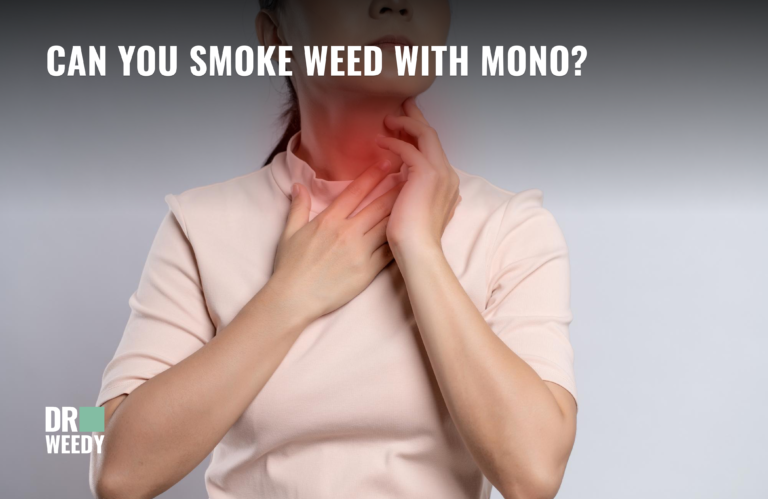
No, not while you are still sick. Smoke and hot vapor land on a throat that mono has already inflamed, and a shared joint or vape passes the virus on in saliva. Forms you don’t inhale, such as edibles, tinctures, capsules or topicals, avoid the throat and the shared mouthpiece. Cannabis you swallow or take under the tongue still goes through a liver that mono often strains, so check with your doctor before using any form while you are sick.
In short
| Smoking or vaping now | Pause itSmoke and vapor irritate an inflamed throat and can slow the way back to normal. |
|---|---|
| Edibles, tinctures, topicals | Ask your doctor firstNo smoke on the throat, but what you swallow goes through the liver. |
| Sharing a joint, vape or bong | Don’tMono spreads mainly through saliva, and a mouthpiece carries it. |
| Your liver and spleen | Often affected by monoBoth can swell, and cannabis is processed by the liver. |
| When to reconsider | After you recover, with your doctor’s OKFever gone, throat healed, liver and spleen checked, energy back. |
Bottom line: don’t smoke or vape while you have mono, and keep every device to yourself. If you use cannabis another way, such as edibles or tinctures, check with your doctor first: THC and CBD go through the liver in any form. Decide when to resume together with your doctor.
Understanding mono and its impact on the body
Mono (infectious mononucleosis, sometimes called the “kissing disease”) is an infection most often caused by the Epstein-Barr virus, or EBV. The virus spreads mainly through saliva, and the illness is most common among teenagers and young adults, especially college students [1]. It is not a cold that clears in a few days: mono makes the immune system work hard for weeks, and it can reach organs you do not usually think about when you have a sore throat.

Because the body is already busy fighting the virus, anything that adds strain matters more than usual. That includes smoke in the throat, extra work for the liver, and hard exercise while the spleen is enlarged.
Symptoms of mononucleosis
The most common signs of mono, according to the CDC and the National Library of Medicine, are [1] [2] [3]:
- Extreme tiredness and weakness
- Fever
- Sore, inflamed throat, often with swollen tonsils
- Swollen lymph nodes in the neck and armpits
- Headache and body aches
- Loss of appetite
- Enlarged spleen or swollen liver (less common)
- Rash
Most people get better in 2 to 4 weeks, but some feel tired for several more weeks, and occasionally symptoms last six months or longer [1]. The fever usually drops within about 10 days, while swollen glands and the spleen tend to settle over about 4 weeks [3]. So yes, it is normal for mono to feel worse before it feels better: the fever settles first, while tiredness and swelling take longer to fade.
Cough and vomiting are not on the CDC’s list of typical mono symptoms [1]. If either shows up, or you simply cannot keep fluids down, tell your doctor rather than waiting it out.
One more thing surprises people: the virus never fully leaves. After the first infection EBV stays in the body in an inactive (latent) state and can occasionally reactivate [2]. That is why “I had mono years ago” does not make you immune to passing the virus on.
Does smoking weed make mono worse?
It can. No study has followed people who smoke cannabis while they have mono, so nobody can tell you exactly how much longer recovery would take. What is known about cannabis smoke, the immune system and the liver points in one direction: during the illness, it adds strain where your body is already stretched. Three reasons stand out. Only the second one is about smoke itself: the immune and medicine questions apply to cannabis in any form, edibles and tinctures included.
-
Suppression of the immune system
Your immune system is what clears EBV. Research reviews show that cannabinoids, including THC, can damp down immune activity: they slow the multiplication of immune cells and reduce the signaling molecules (cytokines) those cells use to coordinate an attack [4]. Most of that evidence comes from lab and animal work plus observational data in people, and there are no clinical trials in acute viral infections, so it is a reason for caution rather than proof of harm.
If you want to go deeper, read our explainer on cannabis and the immune system.
-
Respiratory irritation: your throat and lungs
A sore, swollen throat is the hallmark of mono, and smoke goes straight over it. A review of the respiratory research links cannabis smoking to inflammatory changes in the airways, injury to the windpipe and bronchi, and general airway irritation [5]. The same review notes that cannabis smoke delivers about four times more tar than tobacco, and roughly a third more of it is retained in the lower airway [5]. The studies are observational and not always well controlled for tobacco, but the practical point holds: hot smoke and vapor make an inflamed throat hurt more, trigger coughing, and dry you out at a time when you need fluids.
THC can also leave you dizzy or lightheaded, which is worse when you are already weak and not eating much. If swallowing or breathing ever becomes hard, that is no longer a comfort question; see when to see a doctor right away.
-
Potential drug interactions
Many people with mono take pain and fever relievers, and some are prescribed steroids. The FDA warns that CBD can change how other drugs work and may cause liver injury [6], and the liver is exactly the organ mono tends to strain. The medicines most often used during mono, and what to tell your doctor about each, are in the medication table below.
Can you vape with mono? Smoking vs. vaping vs. edibles
Vaping is not a safe workaround. It skips combustion, but it still sends hot, dry vapor over an inflamed throat, it still delivers THC that your liver has to process, and a shared vape passes saliva from mouth to mouth just like a joint. Edibles and tinctures spare the throat, yet the liver and medication questions stay the same.
Does vaping cause mono? No. Mono is caused by a virus, not by smoke or vapor. What a vape can do is carry that virus from one person to the next when the mouthpiece is shared [2].
| Form | Throat irritation | Spreads the virus if shared | Processed by the liver |
|---|---|---|---|
| Smoking (joint, pipe, bong) | High | Yes | Yes |
| Vaping | Moderate | Yes | Yes |
| Edibles | None | No | Yes, before it reaches the blood |
| Tinctures and CBD oil | Low | No | Yes |
Every form ends up in the liver, and edibles reach it first: everything you swallow passes through the liver before reaching the rest of the body. CBD is not a free pass either. The FDA lists liver injury and interactions with other drugs among the known risks of CBD [6], and the NIH notes abnormal liver test results in people taking it [7]. In one cross-sectional study of chronic cannabis users, an enlarged liver and spleen and mildly raised liver enzymes were common, though alcohol and other substances may have contributed and the design cannot prove cause [8]. While mono is already taxing your liver, “it’s only CBD” is a question for your doctor, not a reassurance.
Using cannabis for a condition that lasts longer than an illness is a different question: see which conditions doctors evaluate.
Can you get mono from sharing a joint or vape?
Yes, you can. EBV spreads most commonly through saliva: kissing, sharing drinks and food, and sharing cups, eating utensils or toothbrushes [2]. A joint, a bong mouthpiece or a vape tip works the same way as a shared cup. Less often the virus spreads through blood and semen during sexual contact, blood transfusions and organ transplants [1].
Coughing and the air in a room are not the main route: the CDC describes saliva and close contact as the way EBV usually travels [2]. The tricky part is timing. When you first get EBV, you can spread it for weeks, and even before you have any symptoms [2]. Later, if the latent virus reactivates, you can pass it on no matter how long ago your own illness was [2]. Someone who feels completely fine can still hand it to you on a shared mouthpiece.
If you live with roommates or a partner, the same logic covers everyday things: drink from your own glass, use your own utensils, and wash them separately for a while. The CDC’s advice for the people around you is the same: avoid kissing someone with mono and don’t share drinks, food or personal items with them [1].
Mono, your liver and spleen: why extra caution matters
Mono is not only a throat infection. An enlarged spleen and a swollen liver are less common symptoms, but they happen, and both organs can stay enlarged even after the tiredness is gone [1]. That is the main reason doctors ask you to slow down for longer than you might expect.
Your liver
Mono can inflame the liver (hepatitis), sometimes with yellowing of the skin and eyes, which is more common in people over 35 [3]. THC and CBD are both broken down in the liver, and the FDA lists liver injury among the risks of CBD [6]. A cross-sectional study found liver enlargement and mildly raised liver enzymes common among chronic cannabis users, though alcohol use may have played a part [8].
Your spleen
The spleen, an organ under your left ribs that filters blood, can swell with mono. A swollen spleen can rupture with strain or a blow; that is rare but serious [3]. The CDC advises avoiding contact sports until you have fully recovered [1], and the swelling usually settles over about 4 weeks [3]. Heavy lifting and rough play wait too.
Alcohol, cigarettes and other strain
Can you drink alcohol with mono? Doctors generally advise against it while the liver is involved: alcohol is processed by the same organ, and the FDA warns that combining CBD with alcohol increases sedation and drowsiness [6]. Can you smoke cigarettes or a cigar with mono? The throat problem is the same as with smoked or vaped cannabis: any smoke, nicotine vapes included, irritates tissue that is already inflamed. Rest is the treatment, so anything that adds work for your body slows the way back.
Cannabis and common mono medications: what to tell your doctor
Tell your doctor about any cannabis use, whatever the form and however occasional. Mono care is mostly rest, fluids and over-the-counter relief for pain and fever [1], and the medicines used for that can interact with what you take on top of them. The FDA notes that CBD can affect how other drugs you are taking work, potentially causing serious side effects [6].
| Medicine | Why it’s used during mono | What to know with cannabis |
|---|---|---|
| Acetaminophen | Pain and fever relief [3] | Processed by the liver, the organ mono may already strain. Ask your doctor before stacking it with cannabis or CBD. |
| Ibuprofen and other NSAIDs | Pain, fever and sore throat [3] | Mention any cannabis use when you ask which reliever suits you. More in our article on mixing marijuana and ibuprofen. |
| Corticosteroids (prednisone) | Sometimes prescribed when symptoms such as throat swelling are severe [3] | They already change how the immune system responds. Your doctor needs to know everything else you take to judge the whole picture. |
| Antibiotics | Not for mono itself, which is viral; only for a separate bacterial infection. The CDC advises against penicillin antibiotics like ampicillin or amoxicillin when you have mono [1] | Name every medicine and supplement, cannabis included, so the prescriber can check for interactions. |
Why the liver keeps coming up: CBD and THC are broken down by liver enzymes, the same system that clears many prescription and over-the-counter medicines. That is how CBD can change the way other drugs work [6], and why the NIH lists drug interactions and abnormal liver tests among the side effects of CBD [7]. During mono, when the liver may already be inflamed, that overlap deserves a direct conversation with your doctor.
Potential benefits of cannabis for mono symptoms: what research shows and doesn’t
There are no studies of cannabis as a treatment for mono. Not for the fever, not for the sore throat, not for the fatigue, and not for the virus itself.
Some people say cannabis takes the edge off headaches and body aches, helps them sleep or brings back their appetite. Those reports come from other conditions and from personal experience, not from people with an active EBV infection. Cannabinoids do have anti-inflammatory and immune-damping effects in lab research [4], but in an infection that same effect is a reason for caution: the immune response is what clears the virus.
Feeling better for an evening is also not the same as recovering faster. A short-lived lift in mood or sleep does nothing about the swollen spleen or the inflamed liver, and it can tempt people to do more than their body is ready for.
Who should avoid cannabis during mono
For some people the usual advice (no smoking or vaping until you recover, and a doctor’s OK before any other form) becomes a firm no for every form, or a decision that has to go through a doctor first.
Precautions and safety considerations with mono
The safest precaution is simple: give your body the weeks it needs without extra load. These are the habits doctors stress most often while mono runs its course.
Do
- Rest as much as your body asks and drink plenty of fluids [1].
- Tell your doctor about any cannabis use; here is how to bring it up.
- Wait for your doctor’s OK before you return to smoking or vaping, sports or heavy lifting, and ask before using cannabis in any other form.
When to see a doctor right away
Can mono be dangerous? Most people recover at home, and serious complications are rare. Two of them need care the same day: a ruptured spleen [3] and swelling that narrows the airway. Knowing the signs is what keeps a rare problem from becoming a dangerous one.
Get medical care now if you have:
How to talk to your doctor about cannabis use
Your doctor asks about cannabis to keep you safe, not to judge you. It changes how they read your liver tests, which medicines they suggest and how they check for interactions. Being specific takes a minute and saves guesswork.
Say what form you use
Smoked, vaped, edibles, tinctures or CBD oil. Each form reaches the throat and the liver differently.
Say how often
Daily, weekly or now and then, and whether you used it since you got sick. Frequency matters more to the doctor than the exact amount.
List every medicine and supplement
Including pain and fever relievers, steroids and anything herbal, so interactions can be checked [6].
Considering alternative options: how to recover from mono
How do you treat mono? There is no single pill that cures it. Recovery comes from rest, fluids and easing symptoms while your immune system does the work [1]. Those basics do more for your recovery than any shortcut.
What makes mono worse. Too little rest, too little fluid, alcohol, and smoke of any kind over an inflamed throat. So does going back to the gym or the field too early, and taking penicillin antibiotics like ampicillin or amoxicillin, which the CDC advises against with mono [1].
When can you smoke weed after mono?
Not on a date on the calendar, but when your body shows it has recovered. The signs are the same whether you smoke or vape, and when you do come back to it, use a new device rather than the one you had while you were sick. If you use a form you don’t inhale, such as edibles or tinctures, the throat matters less and the liver check matters most. The final word belongs to your doctor, who can see what the calendar cannot: your spleen and your liver.
Mark each line for how you are today.
of 4
signs of recovery in place
If you can answer “Yes” to all four, talk to your doctor before you resume.
Use cannabis for a long-term condition? See how a medical card evaluation works.
Living with a long-term condition? How a medical cannabis evaluation works
Mono itself is a short illness, and it usually is not a reason for a medical cannabis recommendation. The question changes if you live with something that lasts: chronic pain, anxiety or insomnia, for example. The full list of conditions doctors look at is in our conditions catalog.
Who decides? A physician licensed in your state, at an appointment one on one with you. The doctor reviews your history, your current medicines and whether cannabis makes sense for you, and may say no. If the answer is yes, you receive a recommendation; the card itself is issued by your state’s program, not by the doctor.
Across 250 reviews from patients in the states where we are licensed. We do not sort them by score and do not hide the low ones.
- 150,000+patients evaluated — everyone who has been through an appointment with us, in every state where we are licensed
- Since 2017doing only this: online evaluations for medical cannabis programs, and nothing else on the side
Every state sets its own list of qualifying conditions and its own process, and they change over time. Rather than repeat them here, our guide to state-by-state laws keeps each program in one place. Pick your state to see how it works where you live.
Frequently asked questions about mono and cannabis
Can smoking or vaping cause mono?
No. Mono is caused by a virus, most often the Epstein-Barr virus, which spreads mainly through saliva [2]. Smoking or vaping does not create the infection, but sharing a joint, pipe or vape with someone who carries the virus can pass it to you.
Can you spread mono without symptoms?
How long does mono last, and how long are you contagious?
Can you get mono again or carry it after you’ve had it?
After the first infection EBV stays in your body in an inactive state and can occasionally reactivate [2]. That means you can carry it and, at times, pass it on even when you feel well. Ask your doctor if mono-like symptoms come back.
Are there long-term effects of mono?
For most people, no. Fatigue is the symptom that lingers longest: it can last weeks after the illness, and occasionally six months or longer [1]. If you are still exhausted months later, see your doctor to look for other causes.
Can you work or travel with mono?
Many people return to desk work or school once the fever is gone and they have the energy for it. Avoid heavy lifting and contact sports until you have fully recovered, because of the spleen [1]. If you travel, rest often, drink plenty of fluids and don’t share drinks or utensils.
Final thoughts
Mono asks for a few weeks of patience. Smoke and vapor irritate a throat that is already raw, a shared joint or vape passes the virus to the next person, and cannabis you smoke, vape or swallow adds work for a liver that may already be inflamed. Edibles and tinctures avoid the first two problems, not the third. None of that makes cannabis forbidden forever. It makes it a question for later, answered with your doctor.
No smoke or vapor until you recover
Fever gone, throat healed, energy back, and liver and spleen checked. Other forms: ask your doctor first.
Don’t share devices
Saliva carries EBV, during the illness and for weeks after.
Decide with your doctor
Tell them about any use, and ask before you resume.
If anything feels wrong along the way, such as trouble breathing or sudden belly pain, go back to when to see a doctor right away.
If you use cannabis for a long-term condition
Answer a few questions online
It takes about five minutes.
Meet a physician licensed in your state
About fifteen minutes, at a time you agree on with the doctor.
If approved, receive your recommendation
Your signed recommendation usually arrives within 24–48 hours.
Trouble booking online? Call (888) 409-2951 or email [email protected]
References
10 sources
- 1. Centers for Disease Control and Prevention. About Infectious Mononucleosis (Mono). 2024.
- 2. Centers for Disease Control and Prevention. About Epstein-Barr Virus (EBV). 2024.
- 3. MedlinePlus, National Library of Medicine. Mononucleosis. Accessed 2026.
- 4. Cannabinoid-induced apoptosis in immune cells as a pathway to immunosuppression. DOI: 10.1016/j.imbio.2009.04.001 PMID: 19457575
- 5. Cannabis smoking and respiratory health: consideration of the literature. DOI: 10.1111/resp.12298 PMID: 24831571
- 6. U.S. Food and Drug Administration. What You Need to Know (And What We’re Working to Find Out) About Products Containing Cannabis or Cannabis-derived Compounds, Including CBD. Accessed 2026.
- 7. National Center for Complementary and Integrative Health, NIH. Cannabis (Marijuana) and Cannabinoids: What You Need To Know. Accessed 2026.
- 8. Possible hepatotoxicity of chronic marijuana usage. DOI: 10.1590/s1516-31802004000300007 PMID: 15448809
- 9. U.S. Food and Drug Administration. What You Should Know About Using Cannabis, Including CBD, When Pregnant or Breastfeeding. Accessed 2026.
- 10. U.S. Department of Health and Human Services. Your Rights Under HIPAA. Accessed 2026.
This article is for information only and is not medical advice. Whether cannabis is right for you is decided by a doctor at an appointment, and medical cards are issued by your state.