

Does Weed Help With Food Poisoning? What the Evidence Shows

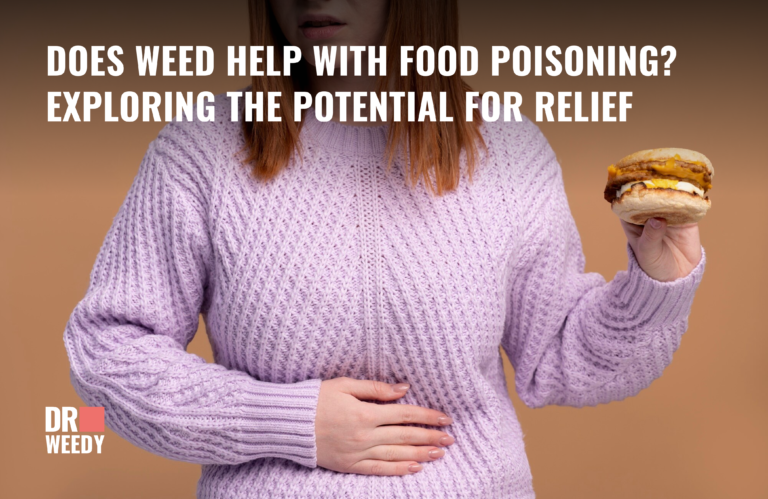
No study has tested cannabis for food poisoning itself, and if you are asking about smoking or vaping, smoke and hot vapor land on a throat already raw from vomiting while a shared joint or vape can pass the germ on. Any form with THC, edibles and tinctures included, can still add dizziness and drowsiness and can interact with medicines, so whether any form fits you is a question for a doctor. Most food poisoning passes on its own: know the warning signs that mean it needs care.
Short version
- Smoke & vapor
- Smoke and hot vapor irritate an airway already sore from vomiting, and they do nothing to clear the infection.
- Any form
- THC in any form can add dizziness and drowsiness when you are already low on fluids, and it can interact with medicines. No form has been studied for food poisoning.
- Shared devices
- A shared joint, pipe or vape mouthpiece can carry the germ to the next person.
- If it keeps coming back
- Vomiting that returns again and again in someone who uses cannabis often may be cannabinoid hyperemesis syndrome, which more cannabis does not fix.
- Fluids first
- Replacing lost fluid is the care that works. An oral rehydration solution does it best; here is what helps.
When does food poisoning need a doctor?
After a night of vomiting, cramps and running to the bathroom, it is natural to want anything that makes it stop, right now. The real danger in that moment is not the nausea. It is losing more fluid than you take in, or missing a sign that this is more than a bad meal.
Most food poisoning passes on its own within a few hours to several days [1]. Get care right away if any of the signs below shows up.
-
Care at home
- You can keep small sips of fluid down.
- You still pee regularly and your mouth is not dry.
- Vomiting and diarrhea are easing rather than getting worse.
- No fever over 102°F and no blood in the stool.
-
Call a doctor today
- Diarrhea that lasts more than 3 days [2].
- A fever over 102°F [2].
- Signs of dehydration in an adult: peeing much less, a dry mouth and throat, feeling dizzy when you stand up [2].
- Signs of dehydration in a child: no wet diaper for 3 hours or more, no tears when crying, sunken eyes or cheeks, little energy [1].
- You are pregnant and have a fever with flu-like symptoms [2].
-
ER or 911 now
Some people should call sooner, even with milder symptoms: pregnant women, babies and young children, adults over 65 and anyone with a weakened immune system. For them, food poisoning more often turns serious [1].
Think a wild mushroom, a chemical or a cannabis edible a child found may be behind it? Call Poison Control at (800) 222-1222. The call is free and confidential [3].
What is food poisoning and how does it happen?
Food poisoning is an illness you get from food or drink that carries germs or the toxins they make. Your gut reacts by trying to push the problem out, which is why vomiting and diarrhea come first [1].

The most common symptoms are:
- Nausea
- Vomiting
- Diarrhea, sometimes bloody
- Stomach cramps and pain
- Fever, often with a headache
They range from mild to severe and usually last from a few hours to several days [1]. What sets the pace is the cause. Four kinds of culprits account for nearly all cases:
-
Bacteria
Salmonella, Campylobacter, E. coli, Staphylococcus aureus, Clostridium perfringens, Listeria and Vibrio. The usual sources are undercooked poultry, eggs and meat, unpasteurized milk and food left out too long [1].
-
Viruses
Mostly norovirus, plus hepatitis A. Norovirus often reaches food through the hands of someone who is sick, and it spreads fast in households [1].
-
Parasites
Toxoplasma, Giardia and Cryptosporidium. They are less common in the US and tend to come from contaminated water, undercooked meat or unwashed produce [1].
-
Toxins and chemicals
Fish and shellfish carrying toxins from algae or bacteria, some wild mushrooms, and pesticide left on unwashed produce [1].
Babies and young children, pregnant women, adults over 65 and people with a weakened immune system are the most likely to get seriously ill [1].
Can you give food poisoning to someone else?
It depends on the cause. A virus like norovirus passes easily from person to person through hands, shared surfaces and food someone sick has touched, so the CDC advises waiting at least 2 days (48 hours) after symptoms stop before you cook for others or care for them [4]. Illness from a toxin already sitting in the food, such as the one Staphylococcus aureus makes in potato salad left out in the sun, comes from the food and not from the person [5].
Can you get food poisoning from vegetables?
Yes. Raw fruits and vegetables are a listed source of Salmonella and E. coli (raw sprouts in particular), and raw produce handled by a sick person can carry norovirus [5]. Rinsing produce under running water and keeping it away from raw meat lowers the risk; the four CDC rules below cover the rest.
How soon does food poisoning start, and how long does it last?
Anywhere from 30 minutes to a couple of weeks after the meal, depending on the germ [2]. That is why the food you blame is often not the one that made you sick: a toxin from Staphylococcus can hit within hours, while E. coli or Campylobacter may take several days to show up. So yes, you can get food poisoning 2 days later, or even later than that.
When did it start after the meal?
Count from the meal you suspect. Not sure? Pick the closest window.
| Germ | Usually starts | Usually lasts | Common sources |
|---|---|---|---|
| Staphylococcus aureusIn this window | 1-6 hours | 24-48 hours | Meats, potato and egg salads, cream pastries kept out of the fridge |
| SalmonellaIn this window | 6-48 hours | 4-7 days | Eggs, poultry, meat, unpasteurized milk or juice, cheese, raw fruits and vegetables |
| Clostridium perfringensIn this window | 8-16 hours | Usually 24 hours | Meats, poultry, gravy, food kept warm too long or cooled too slowly |
| NorovirusIn this window | 12-48 hours | 12-60 hours | Raw produce, shellfish, food handled by someone who is sick |
| CampylobacterIn this window | 2-5 days | 2-10 days | Raw and undercooked poultry, unpasteurized milk, contaminated water |
| E. coli O157:H7In this window | 1-8 days | 5-10 days | Undercooked ground beef, unpasteurized milk and juice, raw sprouts, contaminated water |
Source: FDA, What You Need to Know about Foodborne Illnesses [5].
Read the table as typical ranges, not a test. Only a stool test tells which germ it is, and most people never need one because they get better first.
Can food poisoning last a week?
It can. Salmonella commonly runs 4-7 days, and E. coli and Campylobacter can stretch past a week [5]. But a long illness is not something to wait out quietly: diarrhea that lasts more than 3 days is one of the CDC’s reasons to see a doctor [2], and so is any sign on the warning list above.
Even after the vomiting and diarrhea stop, you may feel tired and your stomach may stay touchy for a few days while you rebuild fluids and get back to normal meals. If you still do not feel right two weeks later, or new symptoms appear, tell a doctor what you ate and when it started.
Is it OK to smoke weed when you have food poisoning?
Smoking is the one form where the answer leans clearly toward no while you are sick. The reasons come in three layers, and only the first is about smoke.
Vomiting leaves the throat raw and the airway irritated by stomach acid. Smoke from a joint, pipe or bong, and the hot aerosol from a vape pen or dab rig, travel down that same airway. Coughing fits on an empty, cramping stomach can set off another round of retching. None of it touches the germ in your gut.
THC acts on the brain whether you inhale it, eat it or hold it under your tongue. When you are already low on fluids and lightheaded, the dizziness and drowsiness it can cause stack on top of that. THC and CBD can also interact with medicines you might take for the illness. And feeling a little less nauseated does not mean you are drinking enough.
If the cause is a virus like norovirus, it is very contagious [4]. A joint, pipe or vape passed around the room moves it straight to the next mouth.
What about forms you do not inhale? Edibles, capsules, tinctures and creams skip the first layer: no smoke or vapor on the throat and no shared mouthpiece. The second layer stays with every form that reaches the bloodstream, and edibles bring their own catch, covered in the table below. Not inhaling a product is not the same as it being right for you.
Does the form matter? Smoking, vaping, edibles and tinctures
Cannabis is not only smoked. Many people eat it, vape it or use drops under the tongue, and each route changes which risks apply. How much THC reaches the blood also differs a lot by route: inhaled THC is absorbed fast, while swallowed THC goes through the liver first [6]. The table shows what each form avoids and what it still carries. It does not rank them, and it is not advice to switch.
The second axis is what the product contains. THC causes the high, the drowsiness and most of the dizziness. CBD does not cause a high, but it is still a drug that can interact with medicines [7]. A risk of one does not carry over to the other, so check the label.
How you use it
Pick how you usually use cannabis; the row stays highlighted.
Product contains
Check the label: it lists THC and CBD per serving.
| Form | How it’s taken | What it avoids | What still applies |
|---|---|---|---|
| SmokingYour form | Joints, blunts, pipes, bongs: burned plant, smoke inhaled | Nothing has to stay down in the stomach. None of the three layers is avoided. | Smoke & vapor Shared devicesWith THC: dizziness, drowsiness, slower reactions, medicine interactions.CBD only: smoke still irritates the airway; medicine interactions remain. |
| Vaping & dabbingYour form | Dry-herb vaporizers, oil pens and cartridges, dabbed wax, shatter or rosin | Burning: there is no smoke. | Smoke & vapor Shared devicesWith THC: concentrates deliver a lot of THC at once; dizziness, drowsiness, interactions.CBD only: hot aerosol on the same airway; medicine interactions remain. |
| Edibles & capsulesYour form | Gummies, chocolate, baked goods, drinks, capsules, oil swallowed | Smoke & vapor Shared devices | Any form Starts late and lasts long; passes through the liver first; may not stay down while you vomit.With THC: a second serving taken “because nothing happened” is a common way to take too much.CBD only: liver and medicine interaction questions remain. |
| Under the tongueYour form | Tinctures and oils held under the tongue, mouth sprays | Smoke & vapor Shared devices | Any form Whatever gets swallowed is processed by the liver like an edible.With THC: dizziness, drowsiness, medicine interactions.CBD only: medicine interactions remain. |
| On the skinYour form | Creams, balms and salves that act where applied; patches that deliver into the blood | Smoke & vapor Shared devices Creams act locally. | Any form for patches, which reach the bloodstream.With THC: a patch can cause the same effects as other THC.CBD only: a patch can still interact with medicines. |
Prescription cannabinoids are a separate category; see below.
Nausea that keeps coming back is a different question from one bad meal, and it is worth a doctor’s look. How doctors approach ongoing nausea
What does the research on cannabis and nausea actually show?
Your body runs its own signaling network, the endocannabinoid system, that helps regulate appetite, gut movement and the urge to vomit. THC acts on the CB1 receptors of that system, including in the brainstem area that triggers vomiting. In animal studies, switching those receptors on reduced vomiting and nausea-like behavior [8]. That is the reason researchers expected cannabinoids to help with nausea. Whether that expectation holds up depends on the kind of study, so each claim below carries a label for the evidence behind it.
-
Review of mostly animal studies
Cannabinoids act on brain areas that control nausea and vomiting.
What this does and doesn’t show
This is the mechanism, mapped mostly in animals [8]. It explains why the idea exists. It does not show what happens in a person with an infection in the gut.
-
Randomized trial, chemotherapy nausea
An oral THC:CBD extract, added to standard anti-nausea drugs, helped some people whose chemotherapy nausea broke through those drugs [9].
What this does and doesn’t show
Among 147 patients, full control of nausea and vomiting came 16 percentage points more often with the extract than with placebo. Sedation (18%) and dizziness (10%) were more common, and driving was not allowed during treatment [9]. The patients had chemotherapy nausea, not foodborne illness, and the extract was used on top of guideline medicines.
-
Review of lab and early studies
CBD acts on several receptors involved in inflammation and immune responses [7].
What this does and doesn’t show
The evidence mixes lab models with early clinical trials, and direct data on acute gut infections is limited. The same review flags inconsistent immune responses, poor absorption by mouth and possible drug interactions [7].
-
Self-reported app data
People who already used cannabis reported less nausea within an hour of using it [10].
What this does and doesn’t show
Ratings came from users of a tracking app, with no control group and no placebo. See the full breakdown of this study just below.
-
No studies yet
Cannabis for food poisoning itself has not been tested in any trial or follow-up study.
What this does and doesn’t show
Every number you may see quoted about cannabis and nausea comes from other conditions. Whether it helps, harms or changes nothing in food poisoning is simply unknown; see what science doesn’t know yet.
The Releaf app study: what it showed and what it didn’t
The study most often quoted on this topic was published in the Journal of Clinical Gastroenterology in 2022 by Stith and colleagues [10]. People who already used cannabis logged their nausea before and after each session in the Releaf app, along with the product they used.
- 886people logged sessions
- 2,220sessions to treat nausea
- 96.4%reported relief within 1 hour
- 3.85points average drop on a 0-10 scale
What it measured
How people who chose to use cannabis rated their own nausea, in real time, before and after a session. It also noted product details such as the plant type on the label and THC and CBD levels.
What it can’t tell you
Whether the relief came from cannabis or from expecting it to work: there was no control group and no placebo. People who keep logging in an app like this may be the ones for whom it seems to work. Nobody checked what caused their nausea.
Not a food poisoning study
The Releaf data did not look at food poisoning. It cannot tell you whether cannabis is safe with an infection, with dehydration, or with the medicines you may be taking for it.
Prescription cannabinoids are not dispensary products
The strongest human evidence for cannabinoids and nausea comes from prescription drugs, not from what a dispensary sells. The FDA has approved them for specific uses only [11].
FDA-approved (dronabinol, nabilone)
- What it is
- Dronabinol (Marinol, Syndros) and nabilone (Cesamet): a set dose of one cannabinoid, made to drug standards.
- Studied for
- Nausea from cancer chemotherapy; dronabinol also for appetite loss with weight loss in AIDS [11].
- Dose
- Fixed and printed on the prescription.
- How you get it
- Prescription from a licensed provider, filled at a pharmacy.
Dispensary products
- What it is
- Plant or extract with many compounds; strength varies by product and batch.
- Studied for
- Not approved by the FDA for any condition [11].
- Dose
- Listed on the label; not standardized like a drug.
- How you get it
- Under your state’s rules, with a medical card where the program requires one.
The FDA has also approved Epidiolex, a purified CBD drug, but for seizures in Lennox-Gastaut and Dravet syndromes, not for nausea [11]. None of these drugs has been tested for food poisoning.
Could it be cannabinoid hyperemesis syndrome instead?
Cannabinoid hyperemesis syndrome (CHS) is repeated bouts of severe vomiting in people who use cannabis regularly over a long time, often relieved for a while only by hot showers or baths [12]. It is easy to mistake for a stomach bug or food poisoning, especially the first few times.
| Sign | Food poisoning | CHS |
|---|---|---|
| How it starts | Hours to days after eating contaminated food [5] | After months or years of regular cannabis use [12] |
| Does it repeat? | Usually one episode that runs its course | Episodes come back in cycles, with calmer weeks in between [12] |
| Link to a meal | Often traced to one meal or drink | No link to any particular food |
| Others sick? | People who shared the food may be sick too | Only the person who uses cannabis |
| Hot shower | No special effect | Long hot showers or baths bring short relief [12] |
| What ends it | Fluids and time; most cases clear in days | Stopping cannabis; symptoms went away after stopping in most reported cases [12] |
More cannabis won’t help
If vomiting keeps returning and you use cannabis often, using more to calm the nausea can keep the cycle going. See a doctor and tell them honestly how often you use it: it changes what they look for. In a 15-year study of 455 adults with cyclic vomiting syndrome, a related condition, cannabis use was linked to lower chances of full remission. That shows a link, not proof of cause [13].
Can smoking weed give you food poisoning?
Smoking itself does not cause food poisoning, because the illness comes from germs or toxins you swallow. Edibles are a different story: a gummy or a brownie is food, and one made or stored carelessly can carry germs like any other snack. Moldy flower is a separate problem. It is a concern for the lungs, not a classic stomach infection.
If you notice that you throw up after smoking, again and again, think about CHS rather than bad food, and bring it up with a doctor.
What are the risks of using cannabis with food poisoning?
Cannabis is not a treatment for food poisoning, and it adds risks of its own. They follow the same three layers.
- Smoke and hot vapor on a throat already burned by stomach acid.
- Coughing that can trigger more retching.
- Dry mouth and thirst on top of fluid loss. Keep drinking an oral rehydration solution whatever else you do.
- Drowsiness and dizziness when you are dehydrated, which raises the risk of fainting or falling when you stand up. In a chemotherapy trial, sedation affected 18% of people on a THC:CBD extract [9].
- No driving. THC slows reactions, and the trial above banned driving during treatment and for 3 days after [9].
- The liver processes whatever you swallow, edibles and tinctures included, at a time your body is already under strain.
- Medicine interactions. Cannabis can affect how the body handles other drugs, which is why guidelines tell clinicians to ask about it routinely [14]. If you take a prescription anti-nausea medicine, an antibiotic or an anti-diarrhea medicine, ask your doctor or pharmacist before combining it with any cannabis product.
- A contagious germ passes to whoever shares the joint, pipe or vape next.
Extra caution
Pregnant or breastfeeding women, children and teens, older adults, and people with liver or heart disease should not try cannabis for a stomach illness without talking to their doctor first. Cannabis products also need to be stored where children cannot reach them: an edible looks like candy.
What science doesn’t know yet
Honest answers about cannabis and food poisoning end quickly, because the research has not been done. These are the open questions, and each one matters for a decision you might make at 3 a.m.
-
Does cannabis help or harm in acute food poisoning?
Why it matters
No study has enrolled people with food poisoning. Anything you read about relief is borrowed from other conditions.
-
Can dulling nausea hide a warning sign?
Why it matters
Feeling calmer or sleepier can make it easier to miss that you have stopped peeing or are getting dizzy. Nobody has measured how often that happens.
-
Does it change the course of the infection?
Why it matters
Cannabinoids act on immune and gut signaling in lab work [7], but there is no data on whether that makes a gut infection shorter, longer or no different.
-
Why don’t chemotherapy results carry over?
Why it matters
Chemotherapy nausea is caused by a drug, in people under medical watch who take set doses on top of standard medicines [9]. Food poisoning is an infection with fluid loss, at home, often with whatever product is in the drawer.
What helps food poisoning: fluids, medicine and what to eat
For most people, treating food poisoning means replacing the fluid and salts you lose and giving the gut time. Here is what that looks like in practice.
Fluids first
-
Step 1
Small sips, often
A few sips every few minutes stay down better than a full glass, which can come straight back up. Keep going between bouts of vomiting.
-
Step 2
Use an oral rehydration solution
These drinks contain glucose and electrolytes, such as Pedialyte, Naturalyte, Infalyte or CeraLyte. They matter most for older adults, people with a weakened immune system and anyone with severe symptoms [15].
-
Step 3
For babies, keep feeding
Keep breastfeeding or giving formula, and give an oral rehydration solution as your child’s doctor directs [15].
-
Step 4
Watch how much you pee
Peeing much less, a dry mouth or dizziness when you stand mean you are falling behind. That is the moment to call a doctor, not to wait [2].
Rest helps, and sleeping is fine as long as you wake up to drink. Skip workouts until you are eating and drinking normally again: exercise adds sweat to the fluid you are already losing.
Which medicines can help
Adults can use over-the-counter loperamide (Imodium) or bismuth subsalicylate (Pepto-Bismol, Kaopectate) for diarrhea from food poisoning [15]. People also ask whether to take Gravol (dimenhydrinate) for nausea or Tylenol (acetaminophen) for aches and fever. A pharmacist can tell you in a minute whether either fits your symptoms and your other medicines. Antibiotics or antiparasitic drugs are used only for certain causes, after a doctor has checked [15].
When not to take anti-diarrhea medicine
If you have bloody diarrhea or a fever, which point to bacteria or parasites, do not use over-the-counter medicine for diarrhea. These medicines can be dangerous for babies and children: talk with a doctor before giving one to a child [15].
What to eat after food poisoning
A strict bland diet is not needed. Research shows a restricted diet does not help diarrhea, and once your appetite returns you can usually go back to your regular food, even if the diarrhea has not fully stopped [16].
Switch to see the second list.
Start with
How to avoid food poisoning, and when you can go back to work
The CDC sums up prevention in four steps [17]. Most home cases trace back to skipping one of them.
-
Clean
Wash your hands before, during and after cooking and before eating, for at least 20 seconds with soap [17].
-
Separate
Keep raw meat, poultry, seafood and eggs away from ready-to-eat food, with their own cutting boards and sealed containers [17].
-
Cook
Use a food thermometer: 165°F for poultry, 160°F for ground meat, 145°F for whole cuts of beef and pork [17].
-
Chill
Never leave perishable food out more than 2 hours, or 1 hour above 90°F. Keep the fridge at 40°F or below [17].
Can you go to work with food poisoning?
Stay home while you are vomiting or have diarrhea. Beyond the risk to coworkers, you will not be at your best when you are dehydrated and running to the bathroom. If the cause might be a virus, give it time after you feel better: the CDC advises waiting at least 2 days (48 hours) after symptoms stop before preparing food or caring for others [4].
At home, wash hands with soap and water rather than relying on hand sanitizer, which does not work well against norovirus [4]. Do not share towels, utensils or, for that matter, a joint or vape with someone who is sick.
When talking to a doctor about medical cannabis makes sense
One bout of food poisoning is not a reason to get a medical card. Medical cannabis programs are built around ongoing conditions, and a stomach bug that clears in a few days does not fit that picture. Symptoms that keep coming back are a different matter. A doctor can then look at the whole picture: possible interactions with your medicines, whether CHS could be part of it, and which forms, if any, make sense for you.
Which sounds closest to you?
Pick the closest one; you can switch.
Pick one to see what usually comes next.
One-time illness
You got sick after a meal and are getting better within days. A medical card is not needed for this. Focus on fluids, rest and the warning signs.
Next: what helps food poisoning and when it needs a doctor.
Vomiting keeps returning
Bouts of vomiting come back every few weeks or months, and you use cannabis regularly. That pattern can point to cannabinoid hyperemesis syndrome, where more cannabis keeps the cycle going. This is a reason to see your own doctor, not to get a card.
Next: compare the signs of CHS, and tell your doctor how often you use cannabis.
Ongoing gut symptoms
Nausea that lingers for weeks, a diagnosed condition like inflammatory bowel disease, or nausea during cancer treatment (see cancer) are where a conversation about medical cannabis can make sense. Read more about nausea as a condition. A licensed doctor reviews your history and medicines and decides whether a recommendation fits.
How an online evaluation works
If the third path fits you, this is what happens. Everything is online (telemedicine), so there is no waiting room and nothing to drive to.
-
Step 1
Choose your state
Each state runs its own program, so everything starts there.
-
Step 2
Fill in a short health form
It takes about 5 minutes: your symptoms, history and current medicines.
-
Step 3
Meet a doctor licensed in your state
A one-on-one appointment of about 15 minutes. You agree on the time with the doctor, so keep the hour around it free.
-
Step 4
The doctor decides
If approved, the signed recommendation arrives in as little as 15 minutes after the appointment, depending on your state. The doctor may say no.
Across 250 reviews from patients in the states where we are licensed. We do not sort them by score and do not hide the low ones.
- 150,000+patients evaluated – everyone who has been through an appointment with us, in every state where we are licensed
- Since 2017doing only this: online evaluations for medical cannabis programs, and nothing else on the side
How medical cannabis rules work in your state
There is no single national medical card. Each state decides who qualifies, which conditions count and how a patient registers, and the rules change over time. A short-term illness like food poisoning is not what these programs are designed for; they cover ongoing conditions as each state defines them. The details for every state are in our guide to state cannabis laws, and you can go straight to your own state here:
Frequently asked questions
Does weed help with food poisoning nausea?
No study has tested it in food poisoning. THC eases nausea in some other settings, mainly chemotherapy, but it does not treat the infection or replace lost fluids, and it can add dizziness and drowsiness when you are dehydrated.
Can I smoke weed with food poisoning?
Smoke and vapor irritate a throat already raw from vomiting, and sharing a joint or vape can spread a contagious germ. Forms you do not inhale avoid those two problems, but THC in any form still brings sedation and possible medicine interactions, so ask a doctor before using any of them.
Can CBD help with nausea?
The trial evidence for nausea is for THC or THC combined with CBD, mostly in chemotherapy. CBD on its own has lab and early data on inflammation, not on food poisoning nausea, and it can still interact with medicines.
How long does food poisoning last?
Usually from a few hours to several days, depending on the germ. Some infections, such as Salmonella or E. coli, can last a week or more. Diarrhea that lasts more than 3 days is a reason to see a doctor.
Why do I throw up after smoking weed?
If it happens again and again in someone who uses cannabis regularly, it may be cannabinoid hyperemesis syndrome. It often comes in cycles and eases for a while under a hot shower. Stopping cannabis is what ends it, so see a doctor and mention how often you use it.
When should you go to the ER for food poisoning?
Go if you have bloody diarrhea, cannot keep any liquid down, have signs of serious dehydration, or notice blurred vision, numbness or weakness. Call 911 for confusion, fainting or someone who is hard to wake.
Have questions about medical cards themselves? Read the medical card FAQ
What to do next
- Right now: keep sipping fluids, and check yourself against the warning signs.
- If nausea or vomiting keeps coming back, talk it through with a doctor instead of treating it on your own.
- If you live with an ongoing condition, see how your state’s medical cannabis program works.
The health form takes about 5 minutes. A doctor licensed in your state decides at the appointment.
New to Dr. Weedy? See how the service works.
Related reading
This is an educational article, not medical advice. Whether medical cannabis fits you is decided by a doctor at the appointment, and the card itself is issued by your state.
References
17 sources
- 1. National Institute of Diabetes and Digestive and Kidney Diseases. Symptoms & Causes of Food Poisoning. 2019.
- 2. Centers for Disease Control and Prevention. Food Poisoning Symptoms. 2025.
- 3. National Capital Poison Center. Poison Control: (800) 222-1222. 2026.
- 4. Centers for Disease Control and Prevention. How to Prevent Norovirus. 2025.
- 5. U.S. Food and Drug Administration. What You Need to Know about Foodborne Illnesses. 2022.
- 6. Medical Cannabis for Best Supportive Care of Patients Affected by Cancers of the Head and Neck: A Narrative Review. DOI: 10.21873/invivo.14172 PMID: 41482365
- 7. Cannabidiol as an immune modulator: A comprehensive review. DOI: 10.1007/s44446-025-00005-7 PMID: 40407987
- 8. British Journal of Pharmacology. Parker LA, Rock EM, Limebeer CL. Regulation of nausea and vomiting by cannabinoids. 2011.
- 9. Oral Cannabis Extract for Secondary Prevention of Chemotherapy-Induced Nausea and Vomiting: Final Results of a Randomized, Placebo-Controlled, Phase II/III Trial. DOI: 10.1200/JCO.23.01836 PMID: 39151115
- 10. Journal of Clinical Gastroenterology. Stith SS et al. The Effectiveness of Common Cannabis Products for Treatment of Nausea. 2022.
- 11. U.S. Food and Drug Administration. FDA and Cannabis: Research and Drug Approval Process. 2023.
- 12. Journal of Medical Toxicology. Sorensen CJ et al. Cannabinoid Hyperemesis Syndrome: Diagnosis, Pathophysiology, and Treatment, a Systematic Review. 2017.
- 13. Clinical characteristics and long-term outcomes in patients with cyclic vomiting syndrome: A 15-year experience at a tertiary referral center. DOI: 10.1111/nmo.14571 PMID: 36989184
- 14. Integrative Therapies in Cancer Care: An Update on the Guidelines. DOI: 10.1200/EDBK_431554 PMID: 38820485
- 15. National Institute of Diabetes and Digestive and Kidney Diseases. Treatment for Food Poisoning. 2019.
- 16. National Institute of Diabetes and Digestive and Kidney Diseases. Eating, Diet, & Nutrition for Food Poisoning. 2019.
- 17. Centers for Disease Control and Prevention. Preventing Food Poisoning. 2025.